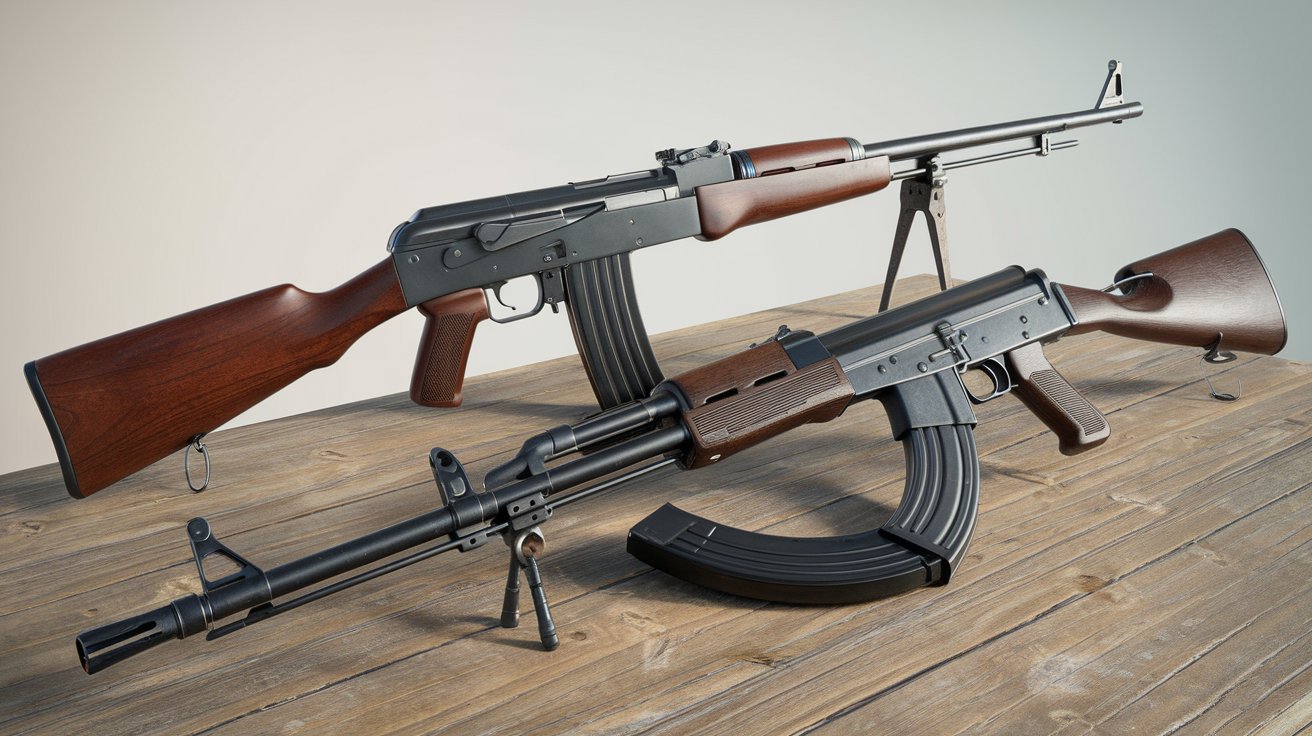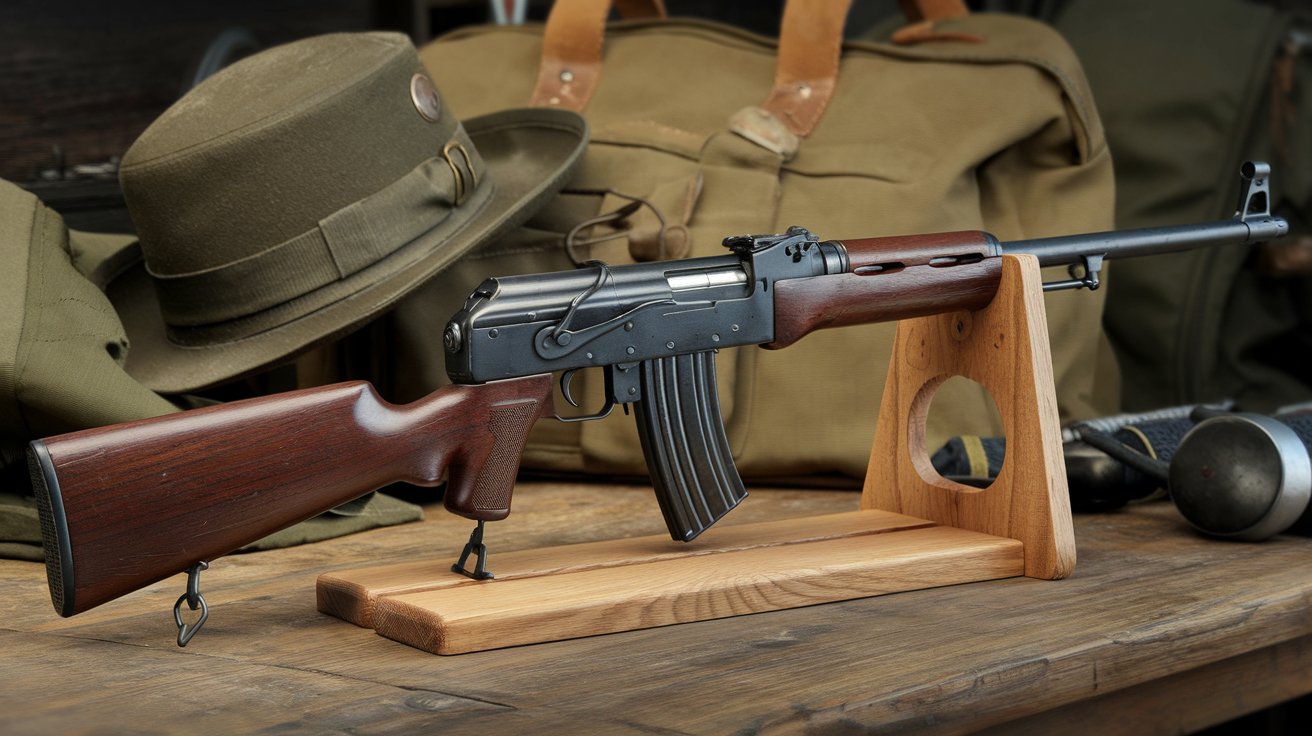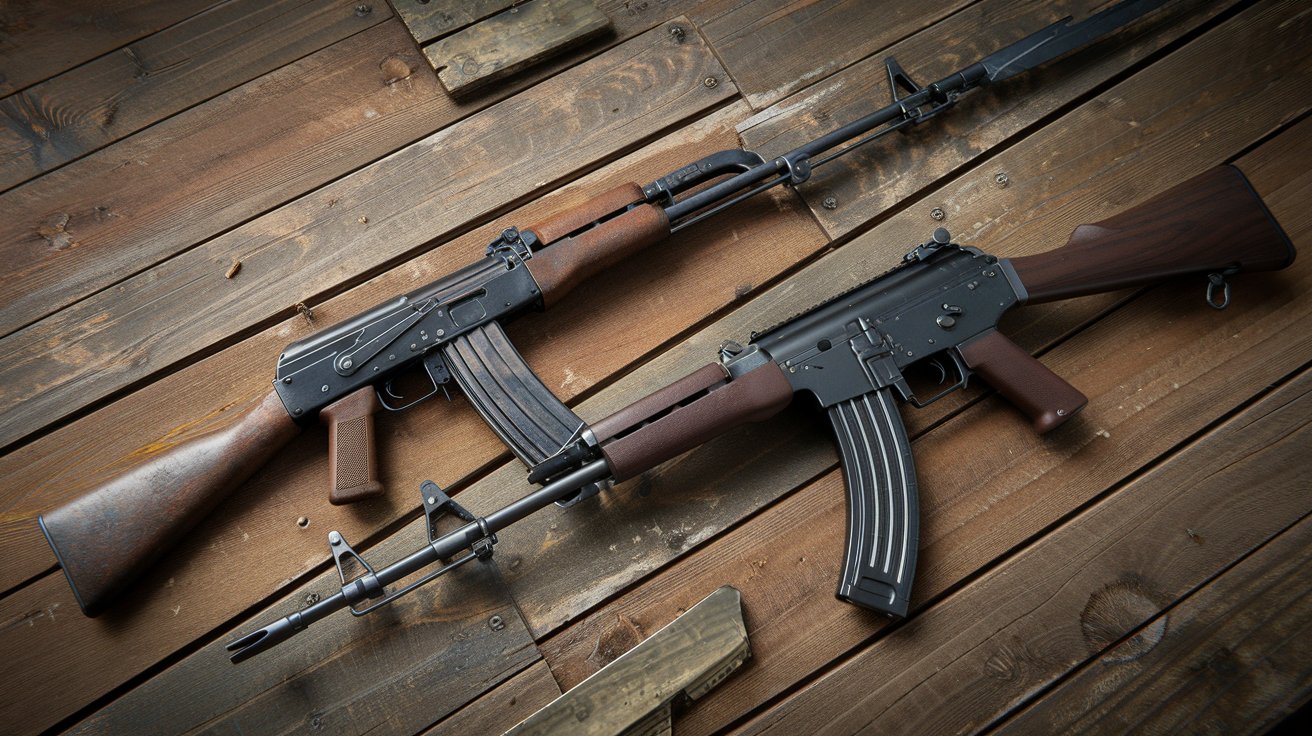
The Mosin Nagant vs Kar98k debate has captivated military history enthusiasts and firearms collectors for decades. These legendary bolt-action rifles served as primary infantry weapons during World War II, each representing the engineering philosophy of their respective nations. The Russian Mosin Nagant emphasizes rugged simplicity and battlefield reliability, while the German Kar98k showcases precision engineering and refined craftsmanship. Understanding their differences helps collectors, historians, and shooting sports participants make informed decisions in the current firearms market.
Historical Background and Development
The Mosin Nagant rifle entered service in 1891 for the Imperial Russian Army, designed by Captain Sergei Mosin with magazine design elements from Léon Nagant. This bolt-action rifle proved its worth through the Russo-Japanese War, World War I, the Russian Civil War, and World War II. Over 37 million units were produced across multiple countries including Russia, Finland, Poland, and China. The rifle’s longevity stems from its simple design, easy maintenance in harsh conditions, and the powerful 7.62x54mmR cartridge that remains in service today.
The Kar98k represents the shortened carbine version of the Gewehr 98, adopted by Nazi Germany in 1935. Building upon Mauser’s legendary 98 action, considered one of the strongest and most reliable bolt designs ever created, the Kar98k combined accuracy with manageable length for modern infantry tactics. Approximately 14.6 million units were manufactured between 1935 and 1945. The rifle chambered the 7.92x57mm Mauser cartridge and featured superior machining quality, controlled-round feeding, and exceptional accuracy potential that made it the preferred platform for German snipers during World War II.
Design and Manufacturing Quality Comparison
The manufacturing philosophy between these rifles reveals fundamental differences in wartime production approaches. Soviet factories prioritized mass production and battlefield functionality over aesthetic refinement. The Mosin Nagant features simpler machining, fewer parts, and designs that tolerated looser tolerances while maintaining reliability. Wartime examples show tool marks, rough finishes, and expedient manufacturing shortcuts that reduced production time without compromising combat effectiveness.
German Kar98k production maintained higher manufacturing standards throughout the war, even as material shortages intensified. The Mauser action requires more precise machining for its controlled-round feed system, claw extractor, and dual-opposed locking lugs. The Kar98k stock typically featured better wood selection and finishing compared to the utilitarian Soviet approach. However, this quality came at a cost: longer production times and higher manufacturing expenses per unit. Late-war Kar98k rifles show quality decline, but they still exceeded typical Mosin Nagant fit and finish standards throughout comparable production periods.
Accuracy and Effective Range Analysis
When examining the Mosin Nagant vs Kar98k accuracy debate, the German rifle demonstrates superior inherent precision. The Kar98k typically achieves 2-3 MOA (minute of angle) groups with quality ammunition, while standard infantry Mosin Nagants generally produce 3-5 MOA groups. This accuracy advantage stems from the Mauser action’s superior lockup, better trigger design, and tighter manufacturing tolerances. The Kar98k’s controlled-round feeding ensures consistent cartridge alignment with the bore, contributing to shot-to-shot consistency that the Mosin’s rimmed cartridge design cannot match.
The effective range for both rifles extends to approximately 500 yards for standard infantry use, though both cartridges remain lethal beyond 1,000 yards. The 7.92x57mm Mauser cartridge offers flatter trajectory and better long-range ballistics compared to the 7.62x54mmR, providing German soldiers with slight advantages in open terrain engagements. Sniper variants of both rifles proved deadly in trained hands, with Finnish snipers achieving legendary status using modified Mosin Nagants, and German snipers dominating the Eastern Front with scoped Kar98k rifles. The accuracy difference matters most at extended ranges where the Kar98k’s precision engineering provides measurable advantages.
Reliability in Combat Conditions
The Mosin Nagant reliability earned legendary status during the brutal Eastern Front campaigns of World War II. Operating in temperatures ranging from minus 40 degrees Fahrenheit to scorching summer heat, the rifle functioned with minimal maintenance. The simple design featured fewer parts to break, larger clearances that prevented mud and ice from jamming the action, and a robust construction that survived battlefield abuse. Soviet soldiers often used the rifle as a club or prying tool without compromising functionality, demonstrating the weapon’s exceptional durability under extreme conditions.
The Kar98k reliability proved excellent under normal combat conditions but required more maintenance than its Soviet counterpart. The tighter tolerances and more complex Mauser action demanded regular cleaning to prevent malfunctions in muddy or frozen conditions. German soldiers learned that the Eastern Front’s extreme environment could compromise the rifle’s controlled-round feeding if not properly maintained. However, when properly cared for, the Kar98k action provided smoother operation, faster cycling, and more consistent feeding than the Mosin Nagant. This represents the classic trade-off between precision engineering and battlefield ruggedness.
Ergonomics and Handling Characteristics
The Mosin Nagant ergonomics reflect late 19th-century design priorities with limited consideration for shooter comfort. The straight bolt handle requires significant manipulation to clear mounted scopes, the safety mechanism is awkwardly positioned for right-handed shooters, and the trigger pull typically ranges from 6 to 10 pounds with considerable creep. The length of pull often proves too long for modern shooters, and the steel buttplate delivers punishing recoil directly to the shoulder. The Mosin Nagant was designed for durability and simplicity rather than shooter comfort or rapid operation.
The Kar98k handling represents a significant ergonomic improvement over the Mosin design. The turned-down bolt handle allows faster cycling and better scope mounting compatibility, while the wing safety proves more intuitive for most shooters. The trigger design permits cleaner breaks, typically ranging from 4 to 6 pounds, though still heavy by modern standards. The rifle’s better balance point and more refined stock design reduce felt recoil despite similar cartridge performance. However, both rifles suffer from limitations of their era, lacking modern features like pistol grips, adjustable length of pull, or recoil-dampening technologies found on contemporary sporting rifles.
Ammunition: 7.62x54mmR vs 7.92x57mm Mauser
The 7.62x54mmR cartridge firing from the Mosin Nagant delivers approximately 2,600 feet per second muzzle velocity with 180-grain projectiles, generating around 2,700 foot-pounds of energy. This rimmed cartridge design dates to 1891 and remains in current military service with Russian armed forces. The rimmed design simplifies extraction but complicates magazine design and can cause feeding issues with damaged rims. Modern ammunition manufacturers produce diverse 7.62x54mmR loads, and surplus ammunition remains relatively abundant in the United States market as of 2026, though prices have increased significantly from the cheap surplus days of the 1990s and 2000s.
The 7.92x57mm Mauser cartridge propels 196-grain bullets at approximately 2,500 feet per second, producing around 2,750 foot-pounds of muzzle energy. The rimless design feeds more reliably in box magazines and allows for more efficient cartridge stacking. The ballistic performance between these cartridges proves remarkably similar, with the Mauser offering slightly flatter trajectory while the Russian round provides marginally better terminal ballistics due to bullet design. Modern shooters find both cartridges expensive compared to common sporting calibers, with 7.92x57mm typically costing 15-30% more than 7.62x54mmR in 2026. Ammunition availability for both remains adequate but requires planning, as most sporting goods retailers stock limited quantities.
Current Market Prices and Collector Value in 2026
The Mosin Nagant price landscape has transformed dramatically over the past two decades. Rifles that sold for $79-$149 during the surplus heyday of 2000-2012 now command $350-$650 for standard infantry models in good condition. Finnish variants like the M39 regularly exceed $800-$1,200, while sniper variants with original scopes approach $2,500-$4,500 depending on authenticity and condition. The collector market distinguishes between various manufacturers, with Tula and Izhevsk arsenal marks affecting value. Refurbished examples with mismatched parts sell at the lower end, while all-matching rifles with clear markings command premium prices among collectors who appreciate historical authenticity.
The Kar98k price reflects its superior manufacturing quality and historical significance, with authentic German military examples ranging from $1,200 to $3,500 for standard infantry rifles in very good condition. Early war production with Nazi proof marks commands higher prices than late-war expedient examples. Original sniper variants with authentic scopes regularly exceed $8,000-$15,000, making them serious collector investments. The Kar98k market requires careful authentication, as numerous post-war rebuilds and reproduction parts can affect value significantly. Collectors prize all-matching serial numbers, original finishes, and clear manufacturer codes. Czechoslovakian and Yugoslavian post-war variants using Mauser 98 actions offer more affordable alternatives at $600-$1,000 for shooters seeking the Mauser experience without the German military premium.
Which Rifle Is Better for Modern Shooters
Determining which rifle is better depends entirely on the shooter’s priorities and intended use. For collectors seeking historical significance and investment potential, the Kar98k represents superior craftsmanship and typically appreciates faster than Mosin Nagants. The German rifle’s better accuracy, smoother action, and refined handling characteristics make it more enjoyable for recreational shooting. Shooters who prioritize precision for hunting or target shooting will appreciate the Kar98k’s inherent accuracy advantages and better trigger, though neither rifle approaches modern bolt-action performance standards.
The Mosin Nagant offers distinct advantages for budget-conscious shooters and those who appreciate rugged simplicity. Lower acquisition costs, cheaper ammunition, and minimal maintenance requirements make it practical for high-volume shooting. The rifle’s historical significance as the primary Soviet infantry weapon and its role in decisive World War II battles provide compelling historical context. For survival rifle applications or situations demanding ultimate reliability with minimal maintenance, the Mosin’s proven durability under extreme conditions remains unmatched. Ultimately, enthusiasts who appreciate military history often acquire both rifles to experience the different engineering philosophies that defined World War II infantry weapons.
Why Is the Mosin-Nagant Called the Garbage Rod
The nickname garbage rod originated among American shooters and collectors who encountered vast quantities of crude, poorly-finished wartime Mosin Nagants during the surplus import boom. The term reflects the rifle’s rough appearance, crude machining, and utilitarian finish compared to other military surplus rifles. Soviet wartime production emphasized quantity over quality, resulting in rifles with visible tool marks, rough stocks, and expedient manufacturing shortcuts that shocked collectors accustomed to refined European and American military firearms. The nickname spread through online forums, particularly Mosin Nagant Reddit discussions, where shooters shared experiences with these inexpensive but effective rifles.
However, the garbage rod designation significantly underestimates the rifle’s actual capabilities and historical importance. The crude appearance masks exceptional battlefield reliability, adequate accuracy for military purposes, and a proven combat record spanning over a century. The rifle’s simple design and loose tolerances that contribute to its rough appearance actually enhance reliability in adverse conditions. Modern shooters who look past the utilitarian finish discover a capable rifle that performs admirably for its age and cost. The nickname persists primarily as affectionate slang among Mosin enthusiasts who appreciate the rifle’s no-nonsense functionality, though historians and serious collectors recognize it as misleading characterization of a historically significant and combat-effective firearm.
Mosin Nagant vs Lee Enfield and M1 Garand Comparisons
The Mosin Nagant vs Lee Enfield comparison reveals interesting contrasts between Soviet and British design philosophies. The British Lee Enfield features the fastest bolt-action design ever issued to general infantry, with smooth rear-locking lugs enabling rapid fire rates exceeding 15-20 aimed shots per minute by trained soldiers. The 10-round detachable magazine provides twice the capacity of either the Mosin or Kar98k. However, the rear-locking design sacrifices some accuracy potential, and the .303 British cartridge offers similar performance to the 7.62x54mmR. The Lee Enfield demonstrates superior ergonomics and faster operation compared to the Mosin, though it requires more manufacturing precision and maintenance than the rugged Soviet design.
Comparing the Mosin Nagant vs M1 Garand highlights the evolution from bolt-action to semi-automatic infantry rifles. The American M1 Garand represents a generational leap, offering semi-automatic fire, faster reloading via en-bloc clips, and superior ergonomics. The .30-06 cartridge delivers better ballistics than the 7.62x54mmR with flatter trajectory and increased effective range. The Garand’s only significant disadvantage involves the eight-round fixed capacity and distinctive clip ejection ping. General Patton called it the greatest battle implement ever devised, and combat experience proved semi-automatic fire provided decisive advantages over bolt-action rifles. For modern shooters in 2026, M1 Garands command premium prices of $1,500-$3,000 compared to $350-$650 for Mosin Nagants, reflecting the Garand’s superior technology and continued popularity among collectors and competitive shooters.
Springfield vs Lee Enfield vs Mosin Nagant vs Kar98k
The Springfield 1903 rounds out the quartet of famous World War II bolt-action rifles, representing American precision manufacturing and Mauser-inspired design. The Springfield shares the Mauser’s controlled-round feeding and dual-opposed locking lugs, delivering accuracy comparable to the Kar98k. The .30-06 Springfield cartridge offers superior ballistics to both the 7.62x54mmR and 7.92x57mm Mauser, with flatter trajectory and better long-range performance. The Springfield features excellent build quality, smooth operation, and refined handling characteristics that make it popular among collectors and shooters in 2026, with prices ranging from $1,200 to $2,500 for original military examples.
When evaluating all four rifles, the Lee Enfield excels at rapid fire and magazine capacity, the Kar98k offers superior accuracy and build quality, the Mosin Nagant provides unmatched ruggedness and affordability, while the Springfield 1903 combines accuracy with superior cartridge performance. Each rifle succeeded in its intended role, reflecting different national priorities and manufacturing capabilities. Modern shooters selecting among these classics should prioritize based on budget, intended use, and historical interest. Collectors often acquire multiple examples to appreciate the diverse engineering solutions these nations developed for similar military requirements during the first half of the 20th century.
Gaming References: Kar98k vs Mosin Nagant in PUBG
The Mosin Nagant vs Kar98k PUBG debate extends these historical rifles into modern gaming contexts where millions of players experience virtual versions. In PlayerUnknown’s Battlegrounds, both rifles function as powerful bolt-action snipers capable of eliminating enemies at long range. The PUBG Kar98k appears as the more common weapon, spawning in regular loot locations and providing excellent one-shot headshot capability against level 2 helmets. The rifle accepts up to an 8x scope and offers manageable bullet drop for most engagement ranges, making it the preferred choice for aggressive sniping.
The Mosin Nagant PUBG damage slightly exceeds the Kar98k, enabling penetration through level 2 helmets for one-shot knockdowns and matching the AWM’s ability against unarmored targets. However, the Mosin spawns exclusively in care packages, making it significantly rarer than the Kar98k. The PUBG damage comparison shows the Mosin dealing 109 base damage versus the Kar98k’s 99 base damage, reflecting the slightly larger 7.62x54mmR cartridge. For players choosing between these rifles, the Kar98k’s availability and versatility typically outweigh the Mosin’s marginal damage advantage. These gaming representations introduce millions of younger players to these historic firearms, often sparking interest in real-world military history and surplus rifle collecting.
Related video about mosin nagant vs kar98k
This video complements the article information with a practical visual demonstration.
What you should know
Is the Kar98k better than the Mosin Nagant?
The Kar98k is generally better in terms of accuracy, manufacturing quality, and handling characteristics, typically achieving 2-3 MOA accuracy compared to the Mosin’s 3-5 MOA. However, the Mosin Nagant offers superior reliability in extreme conditions, lower cost, and simpler maintenance. The Kar98k features a smoother bolt action, better trigger, and more refined ergonomics. For recreational shooting and collecting, most shooters prefer the Kar98k, while the Mosin excels in ruggedness and affordability. The best choice depends on your priorities: precision and quality favor the Kar98k, while budget and durability favor the Mosin Nagant.
Why are Mosin Nagants so expensive now?
Mosin Nagant prices have increased dramatically from $79-$149 in the early 2000s to $350-$650 in 2026 due to several factors. The primary reason involves exhausted surplus imports, as countries like Russia, Ukraine, and Eastern European nations have restricted or stopped exporting military surplus. Increased collector demand, particularly among younger shooters discovering military surplus rifles, has driven competition for remaining inventory. Additionally, ammunition costs have increased significantly, and the rifles’ historical significance has become more appreciated. Market scarcity combines with inflation to push prices upward, transforming what were once cheap surplus rifles into legitimate collector items with investment potential.
Was the Kar98k better than the Lee Enfield?
The Kar98k vs Lee Enfield comparison reveals different strengths rather than clear superiority. The Lee Enfield enabled much faster firing rates due to its smooth bolt design and 10-round magazine capacity, allowing trained soldiers to fire 15-20 aimed shots per minute versus 10-15 for the Kar98k. However, the Kar98k offered superior accuracy with its stronger Mauser action and tighter manufacturing tolerances, making it better for precision shooting and sniper applications. The Lee Enfield excelled in rapid-fire combat situations, while the Kar98k performed better in accuracy-demanding scenarios. Both rifles served their armies effectively throughout World War II, with different tactical advantages reflecting their nations’ combat doctrines.
Which rifle has cheaper ammunition in 2026?
The 7.62x54mmR ammunition for the Mosin Nagant typically costs 15-30% less than 7.92x57mm Mauser ammunition for the Kar98k in 2026. Surplus 7.62x54mmR remains more available, though not nearly as cheap as during the surplus boom years. Quality commercial 7.62x54mmR loads range from $0.95 to $1.85 per round, while 7.92x57mm Mauser typically costs $1.25 to $2.25 per round. The Mosin Nagant’s ammunition advantage contributes to lower overall shooting costs. However, both cartridges are significantly more expensive than common calibers like .308 Winchester or .30-06 Springfield, which offer broader commercial availability and more diverse loading options for modern shooters.
Are original sniper versions of these rifles good investments?
Original sniper variants of both rifles represent strong investment opportunities for serious collectors in 2026. Authentic Kar98k sniper rifles with original scopes and matching numbers command $8,000-$15,000 and have appreciated steadily due to limited supply and strong collector demand. Original Mosin Nagant PU sniper rifles range from $2,500-$4,500 depending on authenticity and condition. However, the market contains many fakes and post-war reproductions that require expert authentication. Investment potential depends on verified authenticity, original components, and documented provenance. While prices have increased substantially over the past decade, quality examples continue appreciating as fewer original sniper rifles remain in collectible condition.
Which rifle is better for hunting in 2026?
For hunting applications, the Kar98k offers advantages in accuracy and handling that make it more effective for ethical game harvesting. Both cartridges provide adequate power for medium to large game including deer, elk, and bear at appropriate ranges. The Kar98k’s superior accuracy and better trigger make precise shot placement easier, which is critical for humane hunting. However, both rifles are heavy, long, and feature military-style stocks that prove awkward in hunting situations compared to modern sporting rifles. Scope mounting on either rifle requires gunsmithing modifications. For hunters specifically seeking a historical military rifle experience, the Kar98k represents the better choice, though modern bolt-action rifles offer significantly superior performance, ergonomics, and practical advantages for actual hunting use.
| Comparison Factor | Mosin Nagant | Kar98k |
|---|---|---|
| Typical Accuracy | 3-5 MOA with standard ammunition | 2-3 MOA with quality ammunition |
| 2026 Market Price | $350-$650 for standard models | $1,200-$3,500 for German examples |
| Reliability | Exceptional in extreme conditions | Excellent with proper maintenance |
| Ammunition Cost | $0.95-$1.85 per round (7.62x54mmR) | $1.25-$2.25 per round (7.92x57mm) |
| Manufacturing Quality | Utilitarian with crude finish | Superior machining and fit |
| Best Use Case | Budget shooting, rugged reliability | Accuracy, collecting, investment |