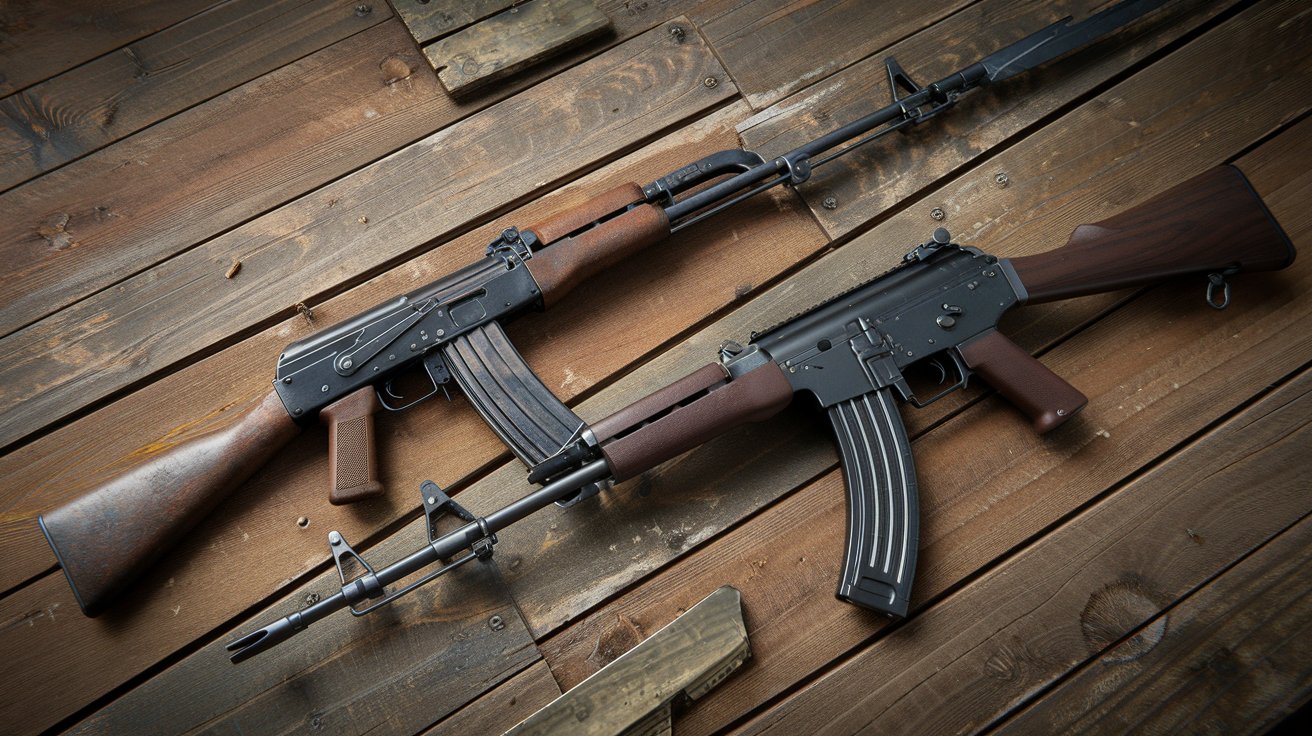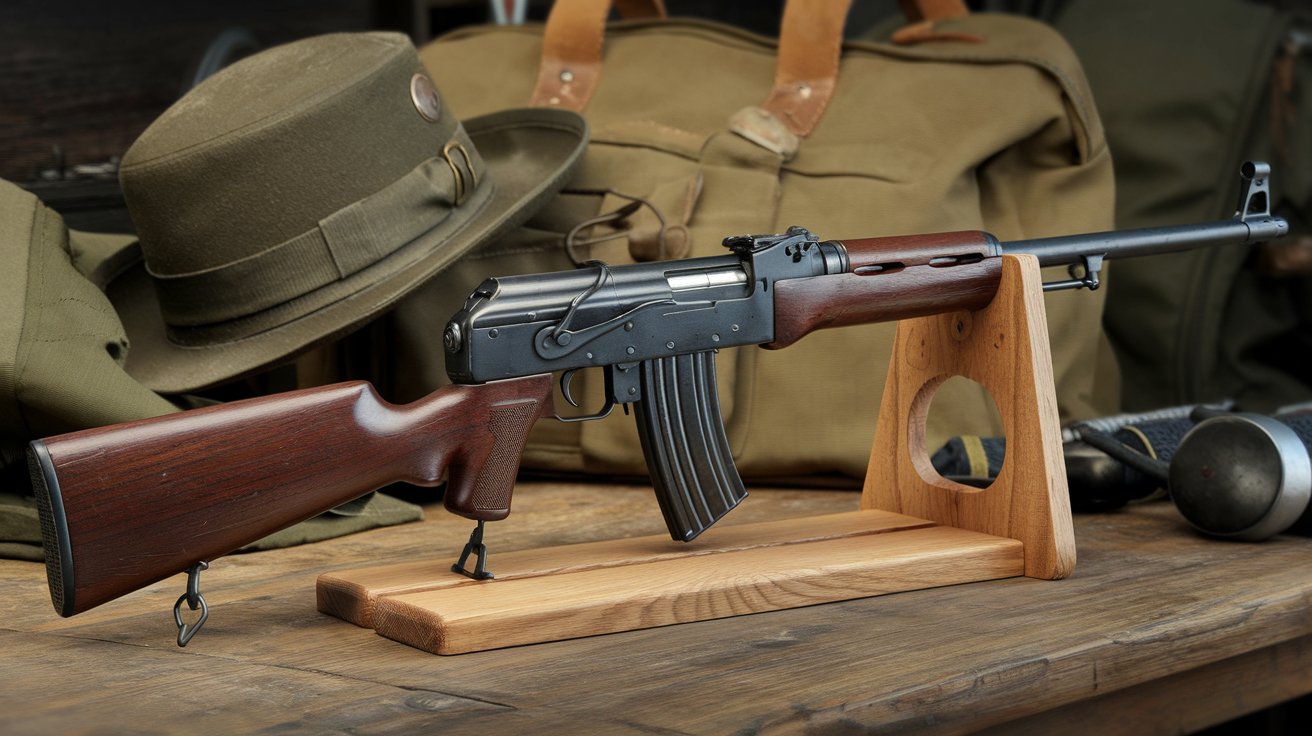
The International Harvester M1 Garand represents one of the most sought-after variants of America’s legendary battle rifle. Produced during a critical manufacturing period from 1953 to 1956, these rifles are distinguished by their unique markings, limited production numbers, and distinctive manufacturing characteristics. Collectors and enthusiasts prize IHC M1 Garands for their historical significance and relative scarcity compared to other manufacturers like Springfield Armory and Winchester.
International Harvester M1 Garand Production History
The International Harvester Company entered M1 Garand production in 1953 under contract with the United States Department of Defense. Unlike traditional firearms manufacturers, IHC was primarily known for agricultural and construction equipment, making their involvement in rifle production particularly unique. The company manufactured M1 Garands at their Evansville, Indiana facility during the Korean War era when demand for military rifles exceeded the capacity of existing arsenals. Production ceased in 1956 after approximately 337,623 rifles were completed, though exact figures vary among historical sources.
During the production years from 1953 to 1956, International Harvester utilized parts and components from multiple sources, including Springfield Armory drawings and specifications. The manufacturing process involved both newly manufactured parts and refurbished components from earlier M1 production runs. This mixing of parts sources created interesting variations that collectors study today. IHC rifles are particularly notable for their distinctive receiver markings and the famous postage stamp design that appears on many examples.
International Harvester M1 Garand Serial Numbers
Understanding IHC M1 Garand serial numbers is essential for authentication and dating these rifles. International Harvester used several serial number ranges throughout their production period, with numbers typically appearing on the receiver heel. The primary serial number ranges for International Harvester M1 Garands include 4400000 through 4660000 series, though gaps exist within this range due to production irregularities and government contract specifications.
IHC Serial Number Ranges by Production Period
The earliest International Harvester serial numbers began in the 4400000 range during 1953. Mid-production rifles from 1954-1955 typically fall within the 4500000 to 4600000 ranges. Late production examples from 1956 occupied the higher numerical ranges approaching 4660000. However, collectors should note that serial number lookup requires careful verification because IHC occasionally used non-sequential numbering, and some numbers were reserved for specific military contracts or rebuilds.
How to Verify Authentic IHC Serial Numbers
Authenticating an International Harvester M1 Garand requires examining multiple components beyond just the serial number. Genuine IHC rifles feature the manufacturer marking on the receiver, typically reading “INTERNATIONAL HARVESTER” or abbreviated variations. The receiver markings should match the serial number range and production period. Modern collectors in 2026 utilize online databases and the Civilian Marksmanship Program archives for serial number verification, though professional appraisal remains recommended for high-value transactions exceeding $3,000.
Are International Harvester M1 Garands Rare
Yes, International Harvester M1 Garands are considered relatively rare compared to other M1 manufacturers. With approximately 337,623 rifles produced during their brief three-year manufacturing period, IHC rifles represent roughly 6-7% of total M1 Garand production. This limited production makes them significantly rarer than Springfield Armory examples, which numbered over 4 million rifles. Among collectors in the United States market during 2026, authentic IHC Garands command premium prices, typically ranging from $2,500 to $6,500 depending on condition and originality.
The rarity of International Harvester M1 Garands is further enhanced by several factors beyond production numbers. Many IHC rifles were issued to military units and saw service use, resulting in parts replacement and modifications that diminish collector value. Original, unmodified examples with matching numbers and correct parts are exceptionally scarce. Additionally, the distinctive postage stamp marking found on many IHC receivers has become a highly sought feature. Rifles displaying this marking in excellent condition represent the most valuable IHC variants, with pristine examples occasionally exceeding $8,000 at specialized auctions.
The Famous IHC Postage Stamp M1 Garand
The International Harvester postage stamp refers to a distinctive rectangular cartouche marking found on certain IHC M1 Garand receivers. This marking, resembling a postage stamp in appearance, contains manufacturing and inspection codes within a bordered rectangular design. Not all IHC Garands feature the postage stamp, making these variants particularly desirable among collectors. The stamp typically appears on the right side of the receiver and indicates specific production batches that underwent particular inspection protocols during the 1953-1954 manufacturing period.
Collectors prize postage stamp IHC rifles because they represent a specific manufacturing anomaly and are less common than standard marked examples. In the current 2026 market, a confirmed postage stamp International Harvester M1 Garand in very good condition commands 25-40% premium over standard IHC rifles. Authentication requires careful examination, as the stamp’s details, including font style and border characteristics, must match documented examples. Forgeries exist, making expert verification essential for purchases exceeding $4,000.
International Harvester M1 Garand Receiver Characteristics
The IHC M1 Garand receiver exhibits several distinctive features that differentiate it from other manufacturers. International Harvester receivers display unique mill marks, finish characteristics, and marking placements specific to their Evansville production facility. The receiver construction followed Springfield Armory specifications but included variations in machining processes that trained collectors can identify. IHC used both newly forged receivers and refurbished earlier production receivers, creating two distinct categories within their production output.
New Production IHC Receivers
New production International Harvester receivers manufactured from raw forgings represent the most valuable category among collectors. These receivers display consistent machining marks, uniform parkerized finish, and clear manufacturer markings. The receiver heel shows the IHC manufacturer stamp and serial number in crisp, deep stampings. New production receivers typically exhibit excellent metal quality with minimal porosity or casting imperfections, reflecting International Harvester’s quality control standards during the Korean War production period.
IHC Rebuild and Refurbished Receivers
Some International Harvester M1 Garands utilized refurbished receivers from earlier production runs, which IHC reworked and remarked. These receivers may show multiple manufacturer markings, welding repairs, or finish variations indicating arsenal rework. While historically significant, rebuild receivers typically command lower collector prices, ranging from $1,800 to $3,200 in 2026 compared to $3,500 to $6,500 for new production examples. Identification requires examining the receiver for weld marks, multiple date stamps, and overstamped markings that indicate refurbishment history.
International Harvester M1 Garand Caliber and Specifications
The International Harvester M1 Garand caliber is .30-06 Springfield (7.62×63mm), identical to all military M1 Garand rifles regardless of manufacturer. This powerful rifle cartridge provided American forces with effective range and stopping power throughout World War II and the Korean War. IHC Garands feature a 24-inch barrel, eight-round en-bloc clip feeding system, and gas-operated semi-automatic action. The overall specifications match military standards with a total length of 43.5 inches and unloaded weight of approximately 9.5 pounds.
The .30-06 caliber remains popular among shooters in 2026, with abundant ammunition availability across the United States. IHC M1 Garands maintain the same accuracy and reliability standards as other manufacturers, typically achieving 2-4 MOA accuracy with quality ammunition. The barrel specifications include a 1:10 right-hand twist rate and two-groove rifling in most examples, though four-groove barrels appear on some rifles depending on the barrel manufacturer. International Harvester sourced barrels from multiple suppliers including Springfield Armory and other contractors, creating variation within their production.
How Many International Harvester M1 Garands Were Made
Approximately 337,623 International Harvester M1 Garands were manufactured between 1953 and 1956, according to most historical records. However, exact production numbers remain subject to debate among historians because government contracts and production records show some discrepancies. Some sources cite numbers as low as 318,000 while others suggest figures approaching 350,000. The most widely accepted estimate places total IHC production at approximately 340,000 rifles, making them significantly less common than Springfield Armory’s 4+ million rifles or Winchester’s 513,000 examples.
The relatively limited production quantity of International Harvester M1 Garands directly impacts their collectibility and market value in 2026. With fewer rifles produced during a shorter timeframe, surviving examples in original condition represent a smaller percentage of the total M1 Garand population. Many IHC rifles were issued to military units, saw combat or training use, and subsequently underwent arsenal refurbishment programs that replaced original parts. Consequently, completely original, all-matching IHC Garands constitute perhaps 15-20% of the original production total, making them genuinely scarce firearms in today’s collector market.
What Are the Rarest M1 Garands
The rarest M1 Garands include several specialized variants beyond standard production models. Winchester Educational Contract rifles, produced in extremely limited numbers for training purposes, represent the pinnacle of M1 rarity with fewer than 500 examples manufactured. Gas trap M1 Garands from early Springfield production (1939-1940) number approximately 50,000 and command premium prices. International Harvester postage stamp variants, while more common than Winchester Educational models, rank among the highly desirable rare variants due to their distinctive markings and limited production within IHC’s overall output.
Other rare M1 Garand variants include Navy Trophy rifles with special markings, USMC marked rifles, and extremely early Springfield serial numbers below 10,000. International Harvester rifles with documented combat provenance or association with specific military units also achieve rarity status. In the 2026 collector market, the rarest M1 Garands can exceed $25,000 for museum-quality examples with complete documentation. Standard IHC rifles, while not approaching this level of rarity, remain significantly more scarce than typical Springfield or H&R production models, justifying their position as desirable collector firearms.
What Company Made the Best M1 Garand Rifle
Determining which company made the best M1 Garand involves considering multiple factors including manufacturing quality, consistency, and collector desirability. Springfield Armory, as the original designer and primary manufacturer, produced the most rifles and established all manufacturing standards. However, many experts and collectors regard Winchester M1 Garands as exhibiting superior fit, finish, and quality control due to Winchester’s extensive firearms manufacturing expertise. Winchester rifles typically display excellent wood-to-metal fit, superior stock finishing, and consistent machining quality throughout their production run.
International Harvester M1 Garands occupy a unique position in the quality discussion. As a non-traditional firearms manufacturer, IHC quality varies more than established arms makers. Early IHC production shows learning curve issues with finishing and component fitting, while mid-to-late production rifles demonstrate improved quality control. International Harvester’s use of mixed parts sources creates variability within their production. For shooters prioritizing reliability and accuracy, Springfield Armory rifles remain the gold standard due to their longer production history and refinement. For collectors, Winchester commands the highest prices for quality, while IHC rifles achieve premium valuations based on rarity rather than manufacturing superiority. In 2026, all three manufacturers produce rifles that function reliably when properly maintained.
Acquiring IHC M1 Garands Through the CMP in 2026
The Civilian Marksmanship Program (CMP) represents the primary legal channel for American citizens to purchase authentic military M1 Garands, including International Harvester examples. However, CMP M1 Garand inventory of IHC rifles has become increasingly limited in 2026. The CMP receives rifles from Department of Defense stocks as they become available, but IHC examples appear infrequently due to their relative scarcity. When available, CMP IHC Garands typically sell for $1,850 to $3,200 depending on grade classification, representing significant value compared to private market prices.
To purchase an M1 Garand from the CMP, buyers must meet eligibility requirements including U.S. citizenship, membership in a CMP-affiliated organization, proof of marksmanship activity, and age verification. The CMP grades rifles into categories including Field Grade, Service Grade, and Collector Grade based on condition, with International Harvester examples rarely available in higher grades due to limited stock. Prospective buyers in 2026 should monitor CMP inventory updates regularly and be prepared to act quickly when IHC rifles become available, as they typically sell within days of listing. The CMP provides authenticity guarantees and historical information superior to most private sales channels.
International Harvester M1 Garand Values and Market Trends 2026
The market for International Harvester M1 Garands has shown steady appreciation throughout the 2020s, with values increasing approximately 8-12% annually in the United States. In 2026, IHC M1 Garand prices range from $2,200 for heavily used field grade examples to $8,500+ for exceptional original rifles with postage stamp markings. Standard IHC rifles in very good condition with mostly correct parts typically sell for $3,200 to $4,800, while all-original examples with matching numbers command $5,000 to $6,500. Documentation, provenance, and condition critically impact valuation.
Market trends indicate continued strong demand for International Harvester M1 Garands driven by several factors. The finite supply of original rifles cannot increase, while collector interest continues growing as newer generations discover M1 Garand collecting. Investment-grade IHC rifles have proven resilient during economic uncertainty, with top-tier examples appreciating even during market downturns. Collectors seeking quality IHC Garands in 2026 should expect competitive bidding at auctions and quick sales of properly priced rifles in private transactions. Expert appraisal is recommended for purchases exceeding $4,000 to ensure authenticity and appropriate pricing given the prevalence of modified rifles misrepresented as original.
Related video about international harvester m1 garand
This video complements the article information with a practical visual demonstration.
Frequently Asked Questions
Are International Harvester M1 Garands rare?
Yes, International Harvester M1 Garands are relatively rare compared to other manufacturers. With approximately 337,623 rifles produced during 1953-1956, IHC rifles represent only 6-7% of total M1 Garand production. They are significantly rarer than Springfield Armory examples and command premium prices among collectors, typically ranging from $2,500 to $6,500 in 2026 depending on condition and originality.
How many International Harvester M1 Garands were made?
Approximately 337,623 International Harvester M1 Garands were manufactured between 1953 and 1956 at their Evansville, Indiana facility. Some historical sources cite slightly different figures ranging from 318,000 to 350,000, but the most widely accepted estimate places total production around 340,000 rifles. This limited production during a brief three-year period makes them considerably scarcer than Springfield Armory’s 4+ million rifles.
What are the rarest M1 Garands?
The rarest M1 Garands include Winchester Educational Contract rifles (fewer than 500 made), gas trap models from 1939-1940 Springfield production (approximately 50,000), and early Springfield serial numbers below 10,000. International Harvester postage stamp variants rank among highly desirable rare variants due to their distinctive markings and limited production. Navy Trophy rifles, USMC marked rifles, and documented combat provenance examples also achieve rarity status, with museum-quality pieces exceeding $25,000 in 2026.
What company made the best M1 Garand rifle?
Most experts consider Winchester M1 Garands to exhibit superior fit, finish, and manufacturing quality due to Winchester’s extensive firearms expertise. Springfield Armory, as the original designer, established all standards and produced the most consistent rifles. International Harvester quality varies due to their non-traditional firearms background, with later production showing improvement. For shooters, Springfield represents reliability; for collectors, Winchester commands highest prices for quality while IHC achieves premiums based on rarity rather than manufacturing superiority.
What is the International Harvester M1 Garand postage stamp?
The postage stamp refers to a distinctive rectangular cartouche marking found on certain IHC M1 Garand receivers, resembling a postage stamp in appearance. This marking contains manufacturing and inspection codes within a bordered rectangular design on the receiver’s right side. Not all IHC Garands feature this marking, making postage stamp variants particularly desirable. In 2026, confirmed postage stamp rifles in very good condition command 25-40% premium over standard IHC rifles, with values ranging from $4,500 to $8,500 depending on condition.
What is the International Harvester M1 Garand serial number range?
International Harvester M1 Garand serial numbers primarily fall within the 4400000 through 4660000 range, though gaps exist due to production irregularities. Early 1953 production began in the 4400000 range, mid-production 1954-1955 rifles typically occupy 4500000 to 4600000, and late 1956 production approached 4660000. Serial numbers appear on the receiver heel alongside IHC manufacturer markings. Verification through CMP databases or expert appraisal is recommended for authentication, especially for high-value transactions.
| Key Aspect | Important Details | Collector Benefit |
|---|---|---|
| Production Numbers | 337,623 rifles made 1953-1956 | Relative rarity increases value |
| Serial Range | 4400000-4660000 series | Easy authentication and dating |
| Postage Stamp | Distinctive rectangular marking | 25-40% premium over standard IHC |
| Caliber | .30-06 Springfield, 24-inch barrel | Abundant ammunition availability |
| 2026 Value Range | $2,200-$8,500 depending on condition | Strong investment appreciation 8-12% annually |
| CMP Availability | Limited stock, $1,850-$3,200 when available | Authentic source with guarantees |