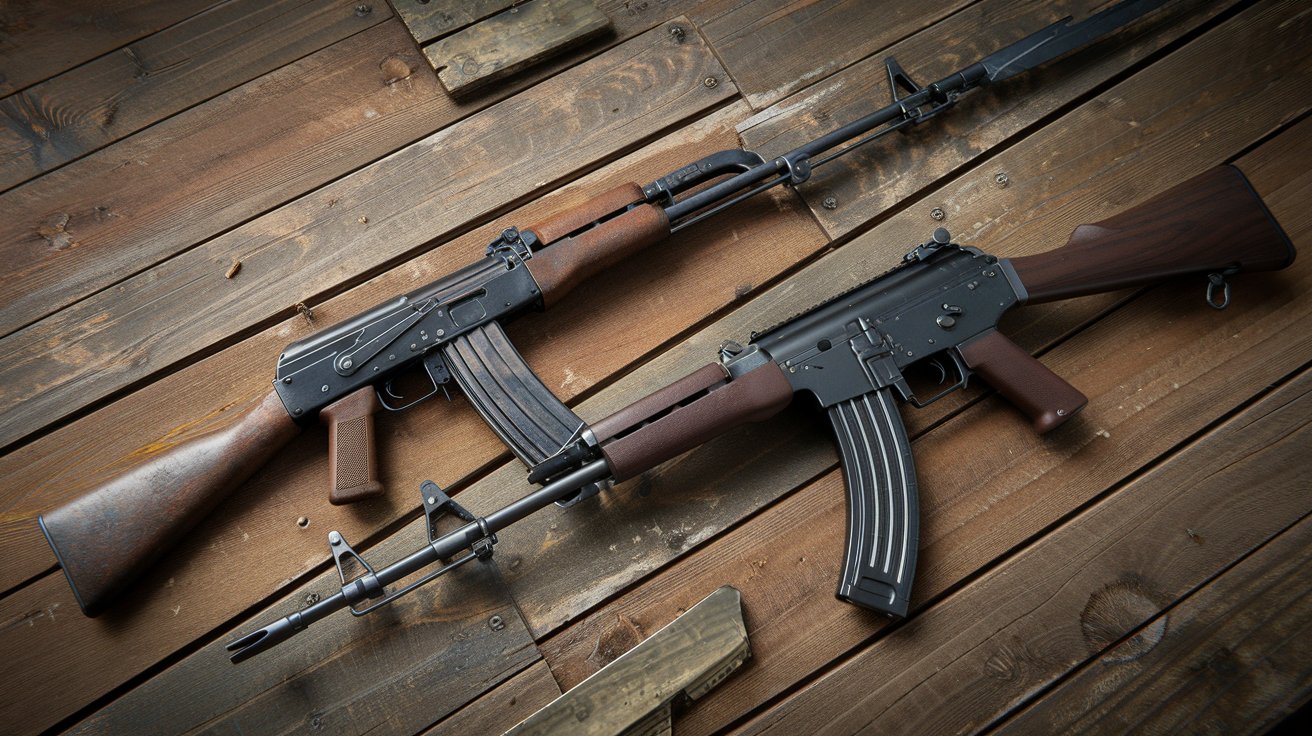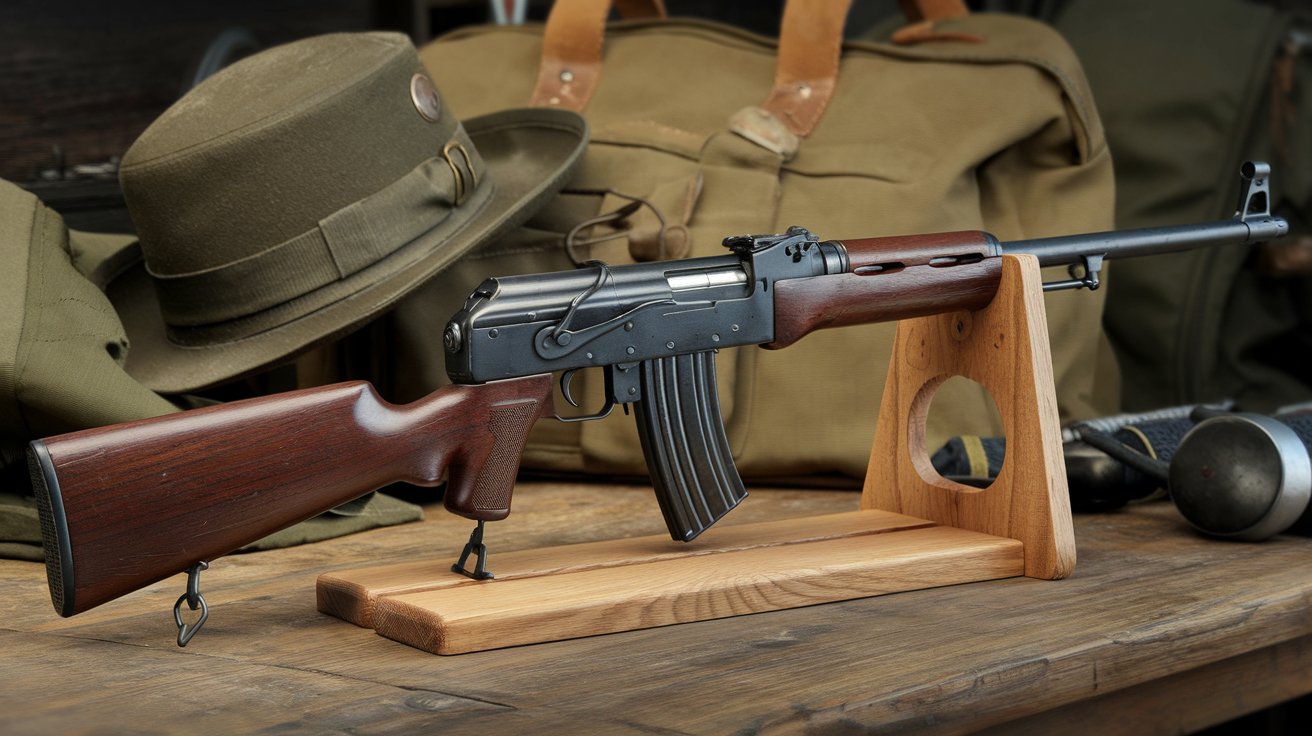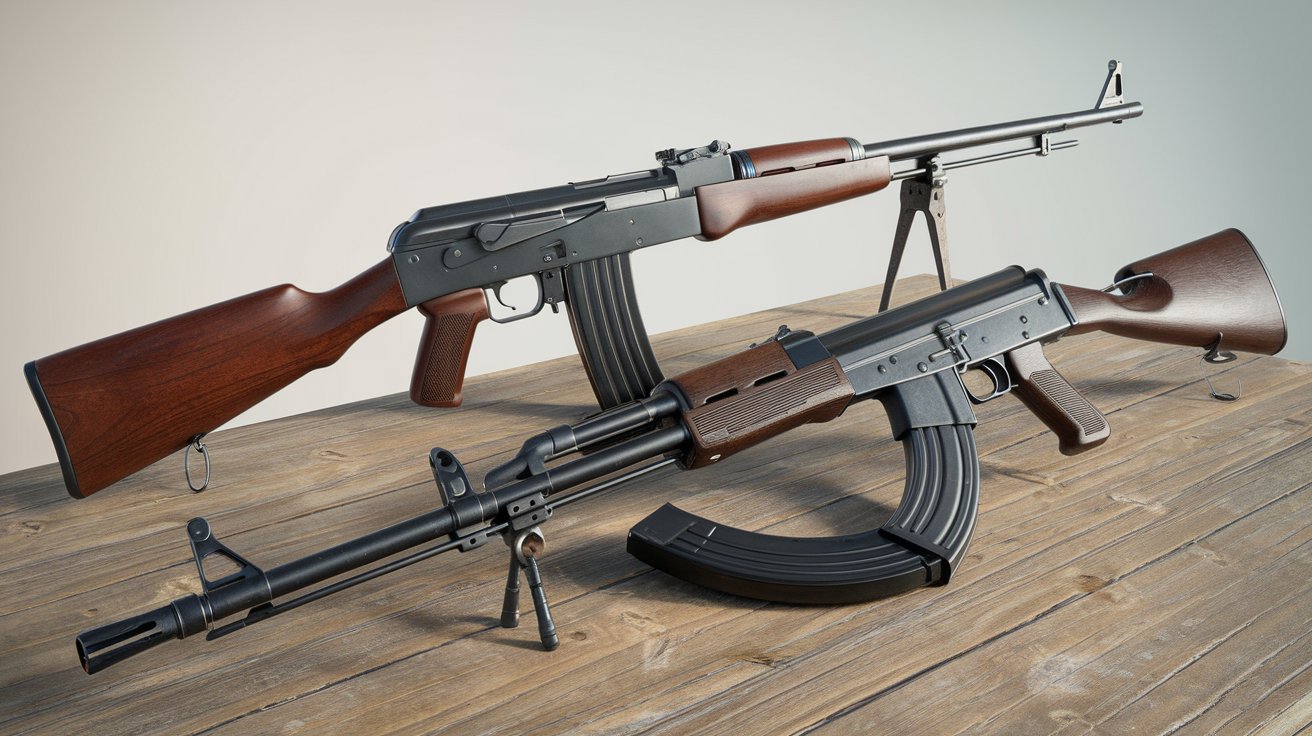
The M1 Carbine and M1 Garand represent two of America’s most iconic World War II firearms, yet they served vastly different purposes on the battlefield. While General Patton famously called the M1 Garand “the greatest battle implement ever devised,” the M1 Carbine offered a lighter, more compact alternative for support troops. Understanding the differences between these legendary rifles—from their .30 Carbine versus .30-06 Springfield calibers to their effective ranges and intended roles—remains essential for collectors, historians, and shooting enthusiasts in 2026. This comprehensive comparison examines specifications, combat performance, historical context, and practical considerations for modern owners.
Fundamental Design Philosophy and Intended Roles
The M1 Garand and M1 Carbine emerged from entirely different military requirements during World War II. The M1 Garand was designed as a primary battle rifle for frontline infantry, delivering powerful long-range firepower with its .30-06 Springfield cartridge. This semi-automatic rifle replaced the bolt-action Springfield M1903 and gave American soldiers a significant tactical advantage with its eight-round en-bloc clip system. The Garand’s design prioritized stopping power, accuracy at distance, and reliability under the harshest combat conditions from 1936 through the 1960s.
Conversely, the M1 Carbine was created to fill a specific gap between the full-size rifle and the M1911 pistol. Officers, vehicle crews, paratroopers, artillery teams, and support personnel needed a lightweight defensive weapon more effective than a handgun but less cumbersome than the 9.5-pound Garand. Introduced in 1942, the Carbine fired the .30 Carbine cartridge, which offered substantially less power but allowed for a significantly lighter 5.2-pound weapon with superior maneuverability. These distinct tactical purposes fundamentally shaped every aspect of their design, from ballistics to ergonomics, making direct comparison challenging without understanding their intended battlefield roles.
Detailed Specifications Comparison
Examining the technical specifications reveals the stark differences between these two firearms. The specifications directly reflect their divergent design philosophies and combat applications.
M1 Garand Specifications
The M1 Garand specifications demonstrate its role as a primary battle rifle. Weighing 9.5 pounds unloaded, the Garand measures 43.6 inches in overall length with a 24-inch barrel. It fires the powerful .30-06 Springfield cartridge (7.62×63mm), delivering a 150-grain bullet at approximately 2,800 feet per second with 2,760 foot-pounds of muzzle energy. The effective range extends to 500 yards for individual targets, with a maximum range exceeding 3,500 yards. The iconic eight-round en-bloc clip system provided a respectable rate of fire for 1940s technology, with experienced shooters achieving 40-50 rounds per minute. The Garand’s gas-operated, rotating bolt action proved remarkably reliable, and its aperture sights offered excellent accuracy potential. As of 2026, original military-surplus Garands through the Civilian Marksmanship Program range from $750 to $1,200 depending on condition and grade.
M1 Carbine Specifications
The M1 Carbine specifications highlight its compact, lightweight design. Weighing just 5.2 pounds unloaded, the Carbine measures 35.6 inches overall with an 18-inch barrel—making it significantly more portable than the Garand. It fires the .30 Carbine cartridge (7.62×33mm), propelling a 110-grain bullet at approximately 1,990 feet per second with only 967 foot-pounds of muzzle energy—roughly one-third the power of the .30-06. The effective range is limited to approximately 200-300 yards, though the Carbine excels at close to medium distances. The 15-round detachable box magazine (30-round magazines in later variants) offered superior ammunition capacity compared to the Garand’s eight-round clips. The Carbine’s simple blowback operation made it easier to manufacture and maintain. In 2026, surplus M1 Carbines typically sell between $900 and $1,500, with original WWII examples commanding premium prices, while reproduction models from manufacturers like Auto-Ordnance and Inland Manufacturing range from $1,000 to $1,400.
Caliber and Ballistic Performance Analysis
The caliber difference between these rifles represents perhaps their most significant distinction. The .30-06 Springfield used in the M1 Garand is a full-power rifle cartridge that was America’s standard military round from 1906 through the 1970s. With 2,760 foot-pounds of energy, it delivers devastating terminal ballistics and maintains lethal effectiveness at extended ranges. The .30-06 can penetrate cover, defeat body armor of its era, and remains effective beyond 500 yards. This cartridge’s power comes at the cost of substantial recoil—approximately 17-20 foot-pounds—which can fatigue shooters during extended firing sessions and makes rapid follow-up shots more challenging.
The .30 Carbine cartridge represents an intermediate solution between pistol and rifle power. With only 967 foot-pounds of muzzle energy, it delivers roughly similar performance to modern pistol cartridges like the .357 Magnum or .44 Magnum, though from a rifle platform. The Germans during WWII often questioned the M1 Carbine’s effectiveness, noting that it lacked stopping power against determined enemies, particularly in cold weather when heavy clothing reduced its already limited penetration. The Carbine’s recoil is minimal—approximately 4-5 foot-pounds—making it extremely pleasant to shoot and allowing for rapid, accurate follow-up shots. Modern ballistic testing in 2026 confirms that while the .30 Carbine remains effective for defensive purposes within 100 yards, it cannot match the M1 Garand’s devastating power at any range. This ballistic disparity reflects their intended purposes: the Garand for frontline combat, the Carbine for close-range defensive situations.
Historical Development and Combat Service
Understanding the historical context of both weapons provides essential insight into their design decisions and battlefield performance. Both rifles emerged during critical periods in American military history and served with distinction across multiple conflicts.
M1 Garand Combat History
The M1 Garand’s development began in the 1920s when Canadian-American designer John Garand sought to create a semi-automatic rifle for the U.S. military. After extensive testing and refinement, the rifle was officially adopted in 1936, making the United States the first nation to field a semi-automatic rifle as its standard infantry weapon. This gave American soldiers a significant firepower advantage over enemies equipped with bolt-action rifles. General George S. Patton’s famous praise—calling it “the greatest battle implement ever devised”—reflected the Garand’s revolutionary impact on infantry tactics. The rifle served as America’s primary battle rifle throughout World War II, where over 4 million units were produced by Springfield Armory and Winchester. It continued service through the Korean War and saw limited use in early Vietnam operations before being replaced by the M14 rifle in the early 1960s. The Garand’s reliability, accuracy, and firepower earned it legendary status, and it remains highly regarded by military historians and collectors in 2026. The Civilian Marksmanship Program continues to sell refurbished Garands to eligible U.S. citizens, preserving this iconic piece of American military heritage.
M1 Carbine Development and Service
The M1 Carbine’s creation stemmed from a 1938 U.S. Army requirement for a “light rifle” weighing less than five pounds. After extensive testing of prototypes from multiple manufacturers, Winchester’s design was selected in 1941. The Carbine entered production in 1942 and became one of the most widely produced American weapons of WWII, with over 6 million units manufactured by various contractors including Winchester, Inland Division, Underwood, and others. The M1 Carbine served extensively in the Pacific Theater, where its light weight proved advantageous in jungle warfare, and in Europe, where paratroopers particularly valued the folding-stock M1A1 variant. Despite its widespread issue, combat reports revealed mixed performance—while soldiers appreciated its light weight and minimal recoil, many noted the .30 Carbine’s limited stopping power in actual combat situations. Korean War veterans particularly criticized its performance in cold weather conditions. The Carbine continued in U.S. military service through Vietnam and remained in limited use with support units into the 1970s. The M2 Carbine variant, featuring selective-fire capability, saw extensive use in Vietnam. As of 2026, the M1 Carbine remains popular among American shooters for its historical significance, pleasant shooting characteristics, and practical utility for home defense and recreational shooting.
Practical Accuracy and Effective Range
The accuracy potential of both rifles differs significantly based on their design parameters and intended engagement distances. The M1 Garand demonstrates exceptional accuracy for a military service rifle, with well-maintained examples capable of 2-3 minute-of-angle (MOA) groups at 100 yards—translating to 2-3 inch groups. The Garand’s long 24-inch barrel, substantial weight, and aperture sights contribute to its precision at distance. Experienced shooters regularly engage targets at 500 yards, and the rifle remains effective on human-sized targets beyond that distance. The National Match variants, built to tighter tolerances, achieve even better accuracy. The .30-06 cartridge maintains sufficient energy and velocity for ethical hunting of large game at 300-400 yards, making the Garand a capable hunting rifle in states where semi-automatic rifles are legal for hunting purposes as of 2026.
The M1 Carbine’s accuracy is adequate for its intended purpose but limited by its shorter sight radius and cartridge performance. Most Carbines achieve 3-5 MOA accuracy, which proves sufficient for defensive purposes within 100-150 yards but limits precision at longer ranges. The .30 Carbine cartridge loses effectiveness rapidly beyond 200 yards due to its relatively low ballistic coefficient and reduced energy. While the Carbine excels at close-range reactive shooting, its practical accuracy advantage lies in rapid follow-up shots enabled by minimal recoil rather than precision at distance. Modern shooters in 2026 appreciate the Carbine for informal target shooting, small game hunting within 100 yards, and home defense applications where its light recoil and compact size prove beneficial. The Reddit firearms community frequently discusses these accuracy differences, with most experienced shooters agreeing that while the Garand is objectively more accurate, the Carbine’s ease of shooting makes it more practical for many recreational purposes.
Weight, Maneuverability, and Practical Handling
The weight difference between these rifles dramatically affects practical handling and user fatigue. The M1 Garand’s 9.5-pound weight provides stability for accurate shooting and helps manage the .30-06’s substantial recoil, but this heft becomes burdensome during extended carrying. Infantry soldiers during WWII often carried the Garand for miles during combat operations, and its weight contributed to physical exhaustion. The rifle’s 43.6-inch length makes it challenging to maneuver in confined spaces, vehicles, and dense vegetation. Modern hunters using Garands often find the weight advantageous for steady offhand shooting but problematic during long treks through rough terrain. The Garand’s balance point sits well forward due to its long barrel, which some shooters find cumbersome for rapid target transitions. However, this front-heavy design aids in recoil management and provides a stable platform for precision shooting.
The M1 Carbine’s 5.2-pound weight—nearly half that of the Garand—revolutionized handling for support troops. This light weight allows for extended carrying without fatigue and enables rapid target acquisition and transitions. The Carbine’s 35.6-inch overall length provides excellent maneuverability in vehicles, buildings, and dense terrain. Paratroopers particularly valued the folding-stock M1A1 variant’s compactness. The Carbine’s handling characteristics closely resemble those of a modern pistol-caliber carbine, making it intuitive for shooters transitioning from handguns. As of 2026, many shooters comparing the M1 Carbine versus alternatives like the Mini-14 note that the Carbine’s lighter weight and superior balance make it more practical for extended shooting sessions despite the Mini-14’s advantages in ammunition availability and magazine capacity. The Carbine’s exceptional pointability and minimal recoil allow even smaller-statured or recoil-sensitive shooters to achieve rapid, accurate fire—a consideration that influenced military logistics when equipping diverse personnel with varied physical capabilities.
Ammunition Capacity and Reload Speed
The ammunition feeding systems represent another fundamental difference between these rifles. The M1 Garand’s eight-round en-bloc clip system proved revolutionary in the 1930s but shows limitations compared to modern detachable magazines. The en-bloc clip loads from the top of the receiver, and once the eighth round is fired, the empty clip ejects with a distinctive “ping” sound—a characteristic some tactical theorists worried might alert enemies that the shooter was empty, though combat reports suggest this concern was largely theoretical. The Garand cannot be topped off with individual rounds; partial clips must be fully ejected before inserting a fresh clip. However, experienced shooters can reload quickly with practice, and the system proved reliable under adverse conditions. The clip ejection system requires no manual manipulation, automatically preparing the rifle for the next clip. Modern shooters in 2026 can purchase reproduction en-bloc clips readily, though original WWII clips remain available and affordable at $2-5 each.
The M1 Carbine’s 15-round detachable magazine nearly doubled the Garand’s capacity while offering tactical flexibility. Shooters can retain partially depleted magazines, top off magazines manually, and carry multiple loaded magazines for rapid reloads. The magazine release, located forward of the trigger guard, allows for quick magazine changes with practice. Later 30-round magazines developed for the M2 selective-fire variant work in standard M1 Carbines, tripling capacity, though reliability can vary with some magazine manufacturers. As of 2026, quality reproduction 15-round magazines cost $20-40, while 30-round magazines range from $25-50. The Carbine’s magazine system proved more practical for sustained engagements, though the magazines themselves represented another piece of equipment requiring maintenance and inventory management. When comparing the M1 Garand versus the M14—which used detachable 20-round magazines—the magazine system represented a significant modernization that addressed the Garand’s primary logistical limitation. The Carbine’s magazine advantage becomes particularly apparent in defensive scenarios where ammunition capacity and reload speed prove critical.
Legal Status and Restrictions in the United States
The legal status of both rifles varies significantly across United States jurisdictions in 2026, with the M1 Carbine facing particular scrutiny in certain states. Both rifles qualify as semi-automatic firearms under federal law and require standard background checks through licensed dealers. Neither rifle is classified as an NFA (National Firearms Act) weapon unless modified with barrels shorter than 16 inches or converted to full-automatic fire. However, state-level regulations create a complex legal landscape that potential owners must navigate carefully.
The M1 Carbine is restricted in several states with assault weapon bans, despite its WWII-era design predating modern “assault weapon” definitions. Some jurisdictions restrict the M1 Carbine when equipped with 30-round magazines, folding stocks (M1A1 variant), or bayonet lugs—features that trigger state-specific definitions. California, Connecticut, Maryland, Massachusetts, New Jersey, and New York maintain varying restrictions, with some requiring registration, others limiting magazine capacity, and some effectively prohibiting certain configurations entirely. The confusion surrounding Carbine restrictions stems from its detachable magazine system and military appearance, which some legislation groups with modern tactical rifles despite its fundamentally different design era and intended purpose. Prospective buyers must verify state and local regulations before purchase, as violations can result in serious criminal penalties.
The M1 Garand generally faces fewer restrictions across the United States due to its en-bloc clip system rather than detachable magazines, which exempts it from many state assault weapon ban provisions. Most states with restrictive firearms laws specifically exclude the M1 Garand from prohibited categories, recognizing its historical significance and traditional sporting use. However, some localities restrict all semi-automatic rifles regardless of configuration, and a few states require registration of all semi-automatic firearms. The Civilian Marksmanship Program (CMP) sales require proof of membership in a CMP-affiliated organization, marksmanship qualification, and compliance with all applicable federal, state, and local laws. As of 2026, CMP purchasers must complete the same background check process as commercial sales. Both rifles remain legal for hunting in most states that permit semi-automatic rifles for game, though hunters should verify local regulations regarding magazine capacity and caliber restrictions. The ongoing political debate surrounding firearms regulations means that legal status can change, making it essential for owners to stay informed about current laws in their jurisdiction.
Maintenance Requirements and Reliability
The maintenance demands of these rifles reflect their military origins and decades of field service. The M1 Garand requires regular maintenance to maintain peak performance, particularly attention to the gas system, operating rod, and trigger group. The gas system must be kept clean to ensure proper cycling, as carbon buildup can affect reliability. The operating rod requires periodic inspection for wear and proper lubrication to prevent binding. The Garand’s complex trigger mechanism benefits from occasional disassembly and cleaning, though field stripping for routine maintenance is straightforward. The gas cylinder plug requires proper torque and occasional inspection, as loose plugs can affect accuracy and function. Many Garands in circulation as of 2026 are 70-80 years old, requiring inspection of critical parts like the operating rod spring, which can weaken over time. Despite these maintenance requirements, properly maintained Garands demonstrate remarkable reliability, functioning in extreme conditions from the arctic to the tropics. The rifle’s robust construction and quality materials ensure longevity when given appropriate care.
The M1 Carbine’s simpler blowback operation requires less intensive maintenance than the Garand’s gas system. The Carbine’s fewer moving parts translate to easier field stripping and routine cleaning. However, the Carbine proves more sensitive to ammunition quality and magazine condition than the Garand. Worn or damaged magazines cause the majority of Carbine malfunctions, making magazine inspection critical for reliability. The recoil spring and hammer spring weaken over time and require periodic replacement—typically every several thousand rounds or every decade for stored rifles. The Carbine’s smaller parts and lighter construction make it somewhat more vulnerable to damage from rough handling compared to the Garand’s tank-like durability. Modern shooters report that properly maintained Carbines with quality magazines demonstrate excellent reliability, though sensitivity to ammunition power levels means that some commercial ammunition may not provide sufficient energy to cycle the action reliably. Many experienced Carbine owners in 2026 recommend testing various ammunition brands to identify reliable performers in their specific rifle. Both rifles benefit from the widespread availability of spare parts, detailed military technical manuals, and extensive gunsmithing knowledge accumulated over 75+ years of civilian ownership. The active collector and enthusiast communities ensure that parts suppliers, specialized gunsmiths, and restoration services remain readily available throughout the United States.
Cost Analysis and Modern Market Values
The current market values for both rifles reflect collector interest, condition, originality, and manufacturer. As of 2026, M1 Garand prices through the Civilian Marksmanship Program range from approximately $750 for Field Grade rifles (showing honest wear but mechanically sound) to $1,200 for Service Grade rifles (better condition with higher original parts percentages) to $2,500+ for Collector Grade specimens with exceptional originality and condition. Original WWII-production Garands with correct parts and manufacturer markings command premium prices, with early Springfield Armory and Winchester examples particularly sought after. Collectors pay substantial premiums for rare variants, specific serial number ranges, and documented historical provenance. Commercial sources outside the CMP typically price Garands $200-500 higher due to CMP’s direct-from-military-stocks pricing structure. Operating costs include ammunition—with quality .30-06 ammunition ranging from $1.25-2.50 per round in 2026—making the Garand relatively expensive to shoot compared to modern calibers.
The M1 Carbine market shows greater price variation based on manufacturer and originality. Original WWII-production Carbines from quality manufacturers like Inland, Winchester, and IBM command $1,200-2,000 depending on condition and originality. Post-war commercial production Carbines, including Plainfield, Universal, and Iver Johnson examples, typically sell for $600-900 but often exhibit quality variations and parts interchangeability issues. Modern reproductions from Auto-Ordnance and Inland Manufacturing (MKS Supply) retail for $1,000-1,400 and offer factory warranties with modern quality control. The .30 Carbine ammunition costs range from $0.80-1.50 per round for commercial production, making it more economical to shoot than .30-06 but more expensive than common calibers like 9mm or .223 Remington. Collectors particularly value original military Carbines with proper USGI parts, correct markings, and wartime production dates. The folding-stock M1A1 Paratrooper variants command significant premiums, often $2,500-4,000 for original examples. Both rifles require investment in accessories including en-bloc clips or magazines, cleaning equipment, and potentially stock repairs or metal refinishing for heavily worn examples. When comparing investment value, original condition Garands from major manufacturers generally appreciate more consistently than Carbines due to Patton’s famous endorsement and the Garand’s recognition as a primary battle rifle. However, both rifles represent tangible investments in American military history that have shown strong value retention over the past decades.
Comparison with Related Firearms
Understanding where these rifles fit among related firearms provides valuable context for potential buyers. When examining the M1 Garand versus M14, the M14 represents the Garand’s direct successor, adopted in 1959. The M14 fires the similar .308 Winchester (7.62×51mm NATO) cartridge, uses 20-round detachable magazines, and incorporates selective-fire capability in standard configuration. The M14 offers superior ammunition capacity and tactical flexibility while maintaining comparable power, though many shooters find the Garand’s en-bloc system more reliable and the rifle’s traditional stock design more comfortable. The M14 never achieved the same legendary status, serving as the U.S. standard rifle for less than a decade before replacement by the M16. Modern civilian M1A variants (semi-auto M14 clones) cost significantly more than Garands—typically $1,500-2,500—making the Garand more economically accessible for shooters seeking full-power semi-automatic rifle performance.
The M1 Carbine versus Mini-14 comparison reveals interesting parallels and contrasts. Ruger’s Mini-14, introduced in 1973, offers similar size and weight to the Carbine but fires the .223 Remington (5.56×45mm NATO) cartridge with superior ballistics, ammunition availability, and lower ammunition costs. The Mini-14 provides greater effective range and better terminal performance than the .30 Carbine while maintaining comparable handling characteristics. However, the M1 Carbine offers historical significance that the Mini-14 cannot match, and the .30 Carbine delivers slightly more energy at close ranges. When comparing the M1 Garand versus Mosin-Nagant—the Soviet Union’s standard bolt-action rifle—the Garand’s semi-automatic fire provides overwhelming tactical superiority despite the Mosin’s comparable .30-06-class power from its 7.62×54mmR cartridge. The Mosin’s bolt-action significantly limits rate of fire, though its extreme affordability (often under $300 in 2026) and cheap surplus ammunition appeal to budget-conscious shooters. The comparison between M1 Carbine and M1 Garand ammunition reveals that .30-06 costs approximately 50-100% more per round than .30 Carbine, though neither approaches the economy of modern high-volume calibers like 9mm or .223 Remington. These comparisons help shooters determine which rifle best suits their specific purposes, whether historical collecting, recreational shooting, hunting, or home defense.
Modern Applications and Practical Uses in 2026
The practical applications for these rifles in 2026 extend beyond historical collecting to include various shooting disciplines and defensive purposes. The M1 Garand excels in competitive shooting, particularly in vintage military rifle competitions, CMP-sanctioned matches, and service rifle categories. The rifle’s inherent accuracy and powerful cartridge make it competitive at distances where modern tactical rifles dominate. Hunters in states permitting semi-automatic rifles successfully use Garands for large game including deer, elk, and wild hogs, where the .30-06 provides more than adequate power at ethical hunting distances. The Garand serves admirably as a home defense rifle for those comfortable with its weight and length, offering devastating stopping power and sufficient capacity for defensive scenarios. However, its weight, length, and over-penetration potential make it less than ideal for close-quarters defensive use compared to modern options.
The M1 Carbine finds broad practical application in 2026 as a versatile recreational rifle. Its light weight and minimal recoil make it ideal for introducing new shooters to centerfire rifles, and its historical significance adds educational value. Many shooters use Carbines for informal target shooting and plinking, where the moderate ammunition costs and pleasant shooting characteristics provide hours of enjoyment. The Carbine performs well for small game and varmint hunting within its effective range, and some hunters use it for deer hunting at close ranges where legal, though the .30 Carbine represents the minimum acceptable power for ethical deer hunting. For home defense purposes, the M1 Carbine offers advantages including light weight for maneuvering through homes, sufficient stopping power at defensive distances, minimal recoil for rapid follow-up shots, and less over-penetration risk than full-power rifles—though modern defensive ammunition in popular calibers generally offers superior performance. The active online community on platforms like Reddit regularly discusses these practical applications, with users sharing experiences, ammunition recommendations, and modification suggestions. Both rifles maintain dedicated followings among American shooters who appreciate their historical significance, proven reliability, and connection to the generation that secured Allied victory in World War II. The continued popularity of these 75-80 year old designs testifies to their enduring quality and the American shooting community’s deep appreciation for historically significant firearms.
Related video about m1 carbine vs m1 garand
This video complements the article information with a practical visual demonstration.
Most asked questions about m1 carbine vs m1 garand
What did the Germans think of the M1 Carbine during World War II?
German forces considered the M1 Carbine marginally effective, noting its limited stopping power and penetration compared to full-power rifle cartridges. German combat reports indicated that the .30 Carbine cartridge lacked effectiveness at ranges beyond 100 meters and struggled to penetrate heavy winter clothing or light cover. However, they acknowledged the weapon’s compact size, light weight, and rapid-fire capability as advantages in close-quarters combat situations. German intelligence assessments classified the Carbine as suitable for its intended purpose—arming support troops—but inferior to standard infantry rifles like the Kar98k or M1 Garand for frontline combat roles. The Germans did capture and occasionally use M1 Carbines, though they generally preferred their own weapons or captured Garands.
What did General Patton call the M1 Garand and why?
General George S. Patton famously called the M1 Garand “the greatest battle implement ever devised.” This endorsement reflected the rifle’s revolutionary semi-automatic capability, which gave American soldiers significant firepower superiority over enemies equipped with bolt-action rifles. Patton recognized that the Garand’s ability to deliver rapid, accurate fire without manual operation between shots fundamentally changed infantry tactics and provided American forces with a decisive combat advantage. The .30-06 cartridge’s power combined with the eight-round capacity and reliable gas-operated action impressed Patton throughout the North African, European, and Pacific campaigns. His endorsement became one of the most famous testimonials in firearms history and significantly contributed to the M1 Garand’s legendary status among American military rifles.
Why is the M1 Carbine restricted in some states but not the M1 Garand?
The M1 Carbine faces restrictions in certain states because its detachable magazine system and military appearance cause it to fall under some state assault weapon ban definitions, despite its 1940s design. States like California, Connecticut, and New York have legislation that restricts semi-automatic rifles with detachable magazines when combined with certain features like bayonet lugs, folding stocks, or high-capacity magazines. The M1 Carbine’s acceptance of 30-round magazines particularly triggers restrictions in jurisdictions limiting magazine capacity. Conversely, the M1 Garand typically avoids these restrictions because its en-bloc clip system doesn’t use detachable magazines, specifically exempting it from most assault weapon definitions. Many state laws explicitly exclude the M1 Garand based on its historical significance and traditional sporting use, while the Carbine’s features unfortunately overlap with legislative language originally intended to address modern tactical rifles.
Was the M1 Carbine weak or inadequate for military use?
The M1 Carbine’s performance generated mixed reviews depending on expectations and combat context. When judged against its design purpose—providing support troops with a defensive weapon superior to pistols but lighter than full rifles—the Carbine succeeded admirably. However, when soldiers attempted to use it as a frontline combat rifle equivalent to the M1 Garand, its limitations became apparent. The .30 Carbine cartridge delivered only about one-third the energy of .30-06, resulting in reduced stopping power, limited penetration, and effectiveness limited to close-to-medium ranges. Korean War reports particularly noted the Carbine’s inadequate performance in cold weather and against heavily clothed enemies. The Carbine was not inherently weak, but rather specialized for specific roles—vehicle crews, officers, paratroopers, and support personnel—where its light weight and compact size outweighed its reduced power. Understanding that it was never intended as a primary battle rifle clarifies the historical performance assessments.
Which rifle is better for modern shooters: M1 Carbine or M1 Garand?
The “better” choice depends entirely on intended use, physical capabilities, and preferences. The M1 Garand offers superior power, accuracy, and effective range, making it ideal for long-range shooting, hunting large game, competitive shooting in service rifle categories, and shooters who prioritize stopping power. Its historical significance as America’s primary WWII battle rifle and Patton’s endorsement add collector appeal. However, the Garand’s 9.5-pound weight, substantial recoil, and expensive ammunition make it challenging for some shooters. The M1 Carbine excels for recreational shooting, introducing new shooters to centerfire rifles, applications requiring light weight and maneuverability, small game hunting, and shooters sensitive to recoil. Its pleasant shooting characteristics and moderate ammunition costs encourage frequent practice. Many enthusiasts ultimately acquire both rifles, appreciating each for its distinct characteristics and historical significance. In 2026, prospective buyers should handle both rifles, consider their primary intended use, and honestly assess their physical capabilities and shooting goals before making a purchase decision.
How do ammunition costs compare between M1 Carbine and M1 Garand in 2026?
As of 2026, .30 Carbine ammunition typically costs between $0.80 and $1.50 per round for commercial loads, while .30-06 Springfield ammunition ranges from $1.25 to $2.50 per round depending on brand and performance characteristics. This makes the M1 Carbine approximately 30-40% less expensive to shoot than the M1 Garand on a per-round basis. However, neither cartridge approaches the economy of high-volume modern calibers like 9mm (approximately $0.25-0.40 per round) or .223 Remington (approximately $0.45-0.75 per round). Shooters planning regular practice sessions should budget accordingly, as a typical 100-round range session costs $80-150 for the Carbine versus $125-250 for the Garand. Both cartridges remain available from major manufacturers including Federal, Remington, Winchester, and Hornady, though selection is broader for .30-06 due to its continued popularity among hunters. The ammunition cost difference, while significant in percentage terms, represents just one factor in the total ownership experience of these historically significant rifles.
| Key Aspect | M1 Garand | M1 Carbine |
|---|---|---|
| Weight | 9.5 lbs – Stable but heavy | 5.2 lbs – Lightweight and maneuverable |
| Caliber Power | .30-06 Springfield – 2,760 ft-lbs energy | .30 Carbine – 967 ft-lbs energy |
| Effective Range | 500+ yards – Long-range capability | 200-300 yards – Close-to-medium range |
| Capacity | 8-round en-bloc clip | 15-30 round detachable magazine |
| Recoil | Substantial (17-20 ft-lbs) | Minimal (4-5 ft-lbs) |
| Best For | Long-range shooting, hunting, competition | Recreational shooting, new shooters, maneuverability |
| 2026 Price Range | $750-$1,200 (CMP), higher elsewhere | $900-$1,500 (surplus), $1,000-$1,400 (new) |
| Ammunition Cost | $1.25-$2.50 per round | $0.80-$1.50 per round |