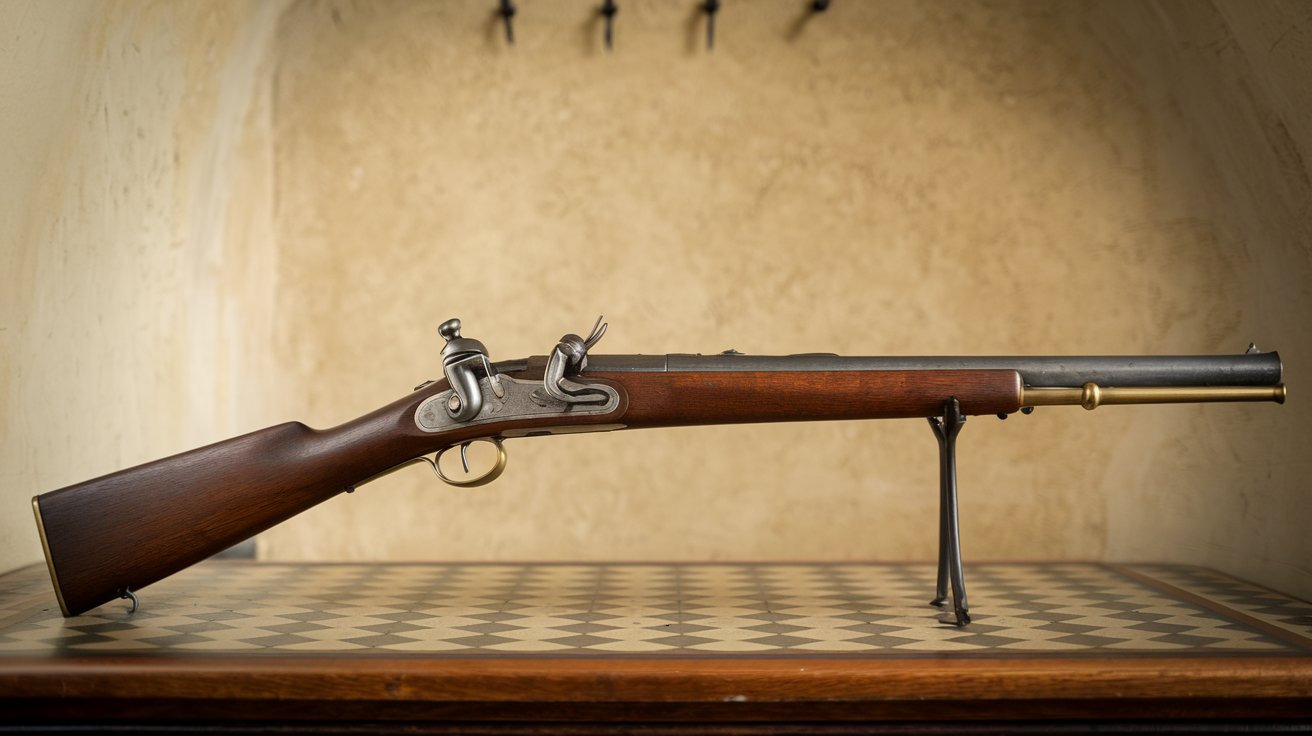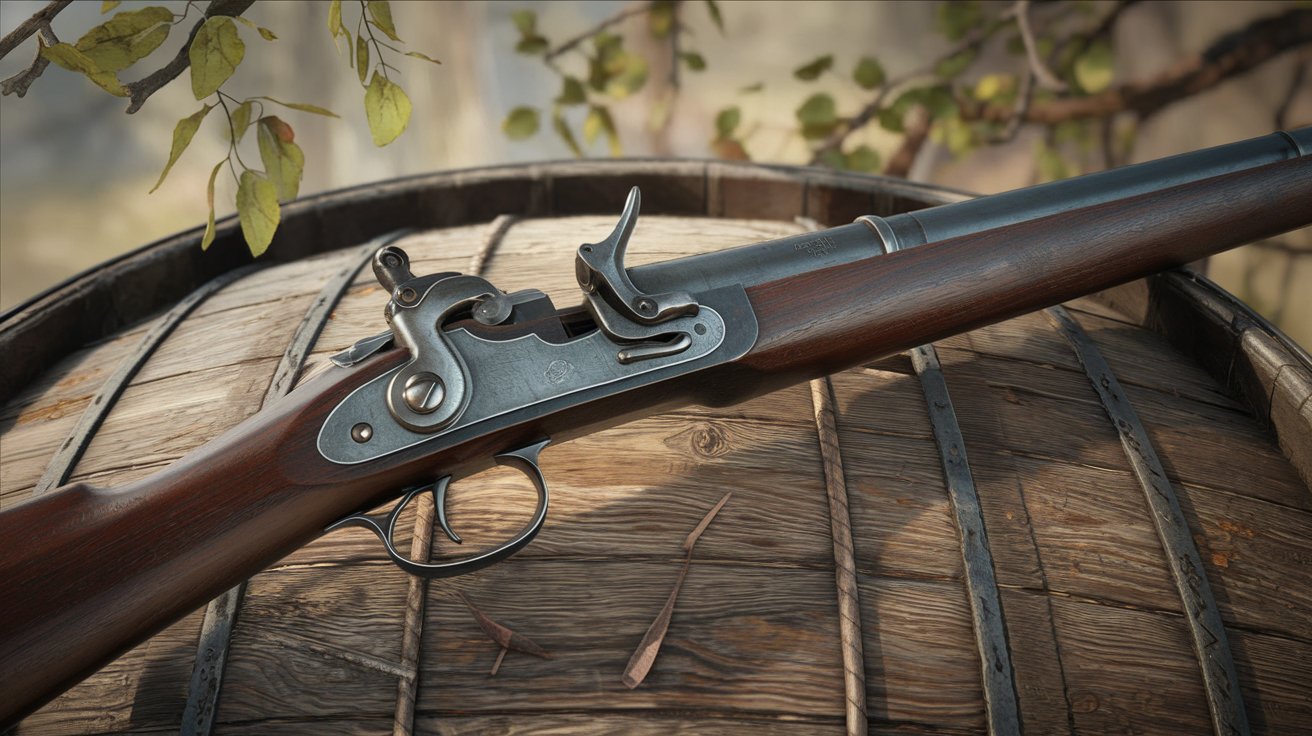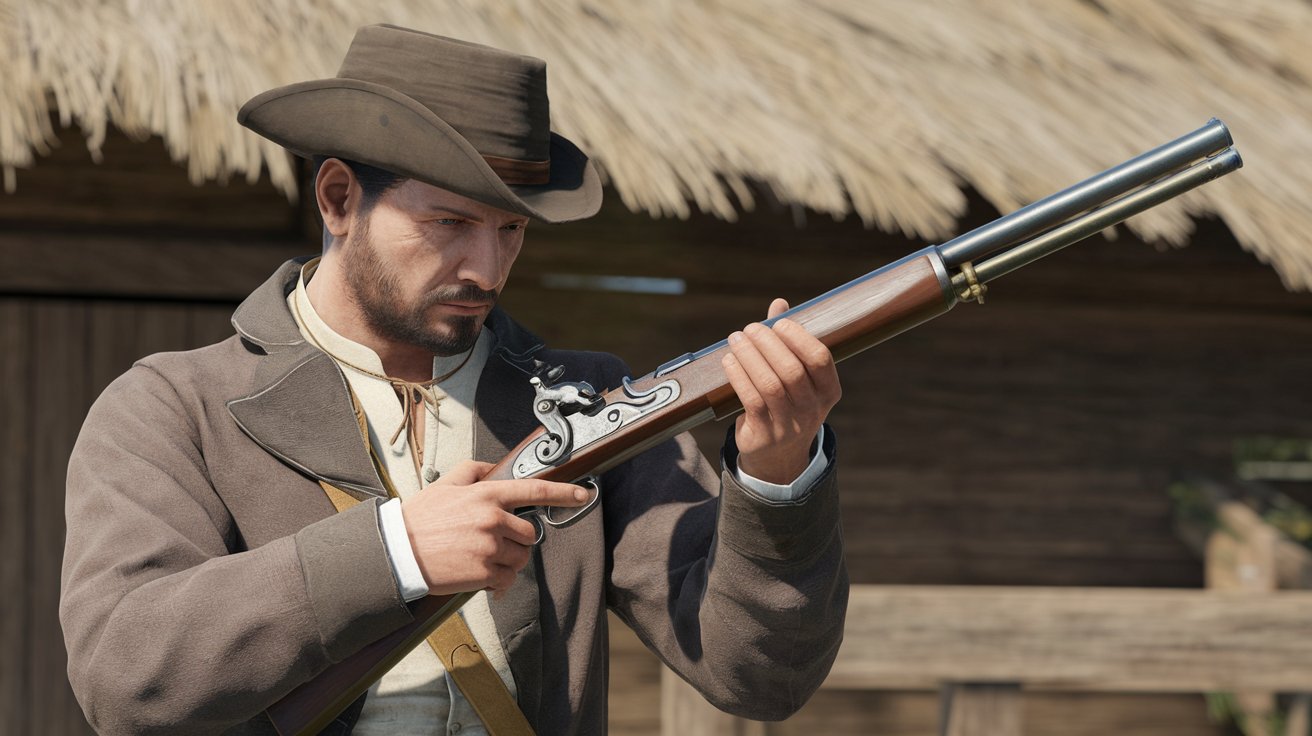
Loading a musket requires understanding a precise sequence of steps that soldiers and hunters mastered through countless hours of practice. This muzzleloader technique involves carefully measuring gunpowder, ramming the ball down the barrel, and priming the firing mechanism. The entire loading process typically takes between 15 to 30 seconds for experienced users, though historical soldiers during the American Revolutionary War could achieve faster reload times with extensive training.
Understanding How a Musket Was Loaded in Historical Context
A musket was loaded through a methodical process that remained largely unchanged from the 16th through 19th centuries. Soldiers carried pre-measured gunpowder cartridges made of paper containing both powder and ball, which streamlined the loading sequence. The musketeer would tear open the cartridge with their teeth, pour a small amount of powder into the priming pan, then dump the remaining powder down the barrel followed by the lead ball still wrapped in paper.
Historical military manuals documented specific loading procedures with up to twelve distinct movements. During the American Revolutionary War era, British soldiers trained extensively to achieve three shots per minute, while Continental Army soldiers typically managed two rounds per minute. This loading speed difference often proved decisive in battle scenarios throughout the 1770s and 1780s.
Essential Components Needed Before Loading
Before attempting to load any muzzleloader, you must gather all necessary components and ensure proper safety equipment. Modern musket enthusiasts and historical reenactors in the United States follow strict protocols established by organizations like the National Muzzle Loading Rifle Association, which has over 15,000 active members as of 2026.
Gunpowder and Projectile Requirements
The gunpowder used in muskets must be black powder specifically formulated for muzzleloading firearms, with FFg or FFFg granulation sizes being most common. A typical musket charge ranges from 60 to 110 grains depending on barrel length and caliber. The musket ball should measure slightly smaller than the barrel’s bore diameter—typically .69 caliber for military muskets and .50 to .58 caliber for civilian versions. Modern practitioners in the United States can purchase these materials through federally licensed dealers, with black powder sales regulated under ATF guidelines updated in 2025.
Tools and Safety Equipment
Essential tools include a ramrod (usually stored under the barrel), a powder measure, patches or wadding material, and a priming horn for flintlock mechanisms. Safety glasses and hearing protection are mandatory for modern shooters, with the National Rifle Association reporting that proper safety equipment reduces muzzleloading incidents by 94% according to their 2026 firearms safety statistics. A cleaning jag, patch puller, and nipple wrench complete the basic toolkit for percussion cap muskets.
Step-by-Step Process: How to Load a Musket Safely
The actual loading procedure follows a strict sequence that prioritizes safety while ensuring reliable ignition. Modern musket shooters at reenactment events across the United States demonstrate these techniques at over 200 major historical events annually, with organizations like the North-South Skirmish Association maintaining detailed safety protocols.
Measuring and Pouring the Powder Charge
Begin by ensuring the musket is pointed in a safe direction with the hammer at half-cock position. Use a powder measure to dispense the exact amount of gunpowder—consistency is crucial for accuracy and safety. Pour the measured powder directly down the muzzle, tapping the side of the barrel gently to settle the powder toward the breech. Never pour powder from the main horn or flask directly into the barrel, as residual sparks can cause catastrophic explosions. This safety rule has been emphasized in American shooting manuals since the 1820s and remains absolutely critical today.
Seating the Ball and Patch
Place a lubricated patch over the muzzle, center the lead ball on the patch, and use a short starter to push both approximately one inch into the barrel. The patch creates a gas seal and engages the rifling in rifled muskets, while also preventing the ball from rolling forward in smoothbore weapons. Remove the ramrod from its storage position and insert it into the barrel with steady, firm pressure—never slam or pound the ramrod, as this can damage the powder granules and affect ignition. Push the ball and patch down until you feel solid resistance against the powder charge, then mark the ramrod to verify full seating on subsequent shots.
Priming the Firing Mechanism
For flintlock muskets, place a small amount of fine-grain priming powder (FFFFg) in the priming pan, filling it approximately three-quarters full. Close the frizzen over the pan to protect the powder from moisture and accidental spillage. On percussion cap muskets, place a copper percussion cap firmly onto the nipple, ensuring it seats completely. Modern reproduction percussion caps manufactured in the United States by companies like CCI follow standardized sizing, with #11 caps being the most common type fitting the majority of reproduction muskets produced since 2020.
How Long Does It Take to Load a Musket
The time required to load a musket varies significantly based on experience level, musket design, and environmental conditions. Historical records from military training documents reveal that loading speed was considered a critical combat skill, with regular drill practice essential for battlefield effectiveness.
Inexperienced shooters typically require 45 to 90 seconds to complete the entire loading sequence safely, while moderately practiced individuals can achieve consistent 30-second reload times. Expert marksmen and competitive shooters participating in timed events at venues like the National Matches at Friendship, Indiana, regularly demonstrate 15 to 20-second reloads. Historical soldiers during the Napoleonic Wars achieved even faster times under battlefield stress, with elite units managing four shots per minute, translating to 15-second reload cycles. Weather conditions dramatically affect loading times—rain, high humidity, and cold temperatures can double or triple reload duration due to powder handling difficulties and increased misfires.
What Is Loading a Musket Called
The process of loading a musket is technically termed muzzleloading, referencing the fact that all components enter through the muzzle end of the barrel rather than through a breech mechanism. Historical military terminology includes several specific terms for various aspects of the procedure.
The complete sequence was often called ‘making ready’ or ‘charging the piece’ in 18th and 19th-century military manuals. Individual steps had specific names: ‘priming’ referred to placing powder in the pan or cap on the nipple, ‘ramming’ described pushing the ball down the barrel, and ‘tamping’ meant compressing the powder charge. British military drill from the 1760s used commands like ‘Load’ and ‘Make Ready’ to coordinate volley fire among infantry ranks. Modern muzzleloader enthusiasts in the United States generally use simplified terminology, though historical reenactment units maintain period-accurate vocabulary during demonstrations at the approximately 180 Revolutionary War and Civil War reenactment events held annually across the country as of 2026.
Common Mistakes When Loading a Muzzleloader
Even experienced shooters can make errors during the loading process that compromise safety or performance. Understanding these common mistakes helps prevent dangerous situations and improves shooting consistency at ranges across the United States.
Double Loading and Dry Balling
Double loading occurs when a shooter loads a second charge without firing the first, creating extreme pressure that can burst the barrel. This mistake typically happens during rapid-fire demonstrations or when distracted during the loading sequence. Marking your ramrod with tape or a permanent line at the correct seating depth prevents this dangerous error. Dry balling—loading the ball without powder—is equally problematic, requiring the ball to be extracted using a ball puller attachment or by removing the breech plug. The National Muzzle Loading Rifle Association reports that dry balling accounts for approximately 30% of range delays at club events, though modern CO2 discharge systems can safely remove dry-balled projectiles in under two minutes.
Incorrect Powder Measurement and Contamination
Using too much or too little gunpowder creates either dangerous pressure spikes or unreliable ignition. Always use a calibrated powder measure rather than estimating charges, and never increase powder loads beyond manufacturer recommendations. Powder contamination from moisture or oil dramatically reduces reliability—store black powder in sealed containers with desiccant packets, and keep the powder horn completely dry. Modern synthetic lubricants can contaminate powder, so traditional petroleum-free bore butter or beeswax-based lubrications remain preferred by serious muzzleloader shooters. Laboratory testing by Lyman Products in 2025 demonstrated that moisture-contaminated powder shows a 78% increase in misfire rates compared to properly stored powder.
Historical Loading Techniques Across Different Eras
The methodology for loading muskets evolved significantly from the early matchlock era through the percussion cap period. Understanding these historical variations provides context for modern practitioners and demonstrates the technological progression of firearms development in America and Europe.
Early matchlock muskets from the 1500s required the shooter to manually apply a burning slow match to the priming powder, making loading cumbersome and dangerous in wet conditions. The flintlock mechanism, which dominated from 1650 through 1840, simplified priming and improved reliability, allowing soldiers to maintain three rounds per minute under ideal conditions. The percussion cap system, introduced commercially in the 1820s and widely adopted by the 1840s, further reduced misfire rates from approximately 30% with flintlocks to under 5% with percussion ignition. Modern reproductions manufactured in the United States by companies like Pedersoli USA and Traditions Performance Firearms incorporate safety improvements while maintaining historical authenticity, with over 45,000 reproduction muskets sold annually to collectors and reenactors according to 2026 industry estimates.
Modern Applications and Practical Uses
Learning how to load a musket remains relevant in 2026 for multiple practical purposes beyond historical interest. The muzzleloader community in the United States continues growing, with special hunting seasons and competitive shooting disciplines specifically designed for traditional firearms.
Forty-three states currently offer dedicated muzzleloader hunting seasons with extended opportunities beyond regular firearms periods, according to 2026 state wildlife agency regulations. These special seasons typically run two to four weeks, providing hunters additional time to pursue deer, elk, and other game species. Black powder cartridge competitions through organizations like the Single Action Shooting Society attract thousands of participants nationwide, with major championship events in Texas, Arizona, and Ohio drawing competitors from across North America. Historical reenactment remains the largest single use category, with an estimated 75,000 active participants in Revolutionary War, War of 1812, and Civil War reenactment groups across the country. Educational programs at national parks and historic sites employ hundreds of interpreters who demonstrate musket loading techniques to over 2 million visitors annually.
Safety Protocols and Legal Considerations
Operating any muzzleloader requires strict adherence to safety protocols and understanding of applicable federal and state regulations. The Bureau of Alcohol, Tobacco, Firearms and Explosives (ATF) classifies antique firearms and their replicas differently than modern firearms under current 2026 federal law.
Muzzleloading firearms manufactured before 1898 or replicas thereof are not considered firearms under federal law, meaning they can be purchased without background checks or Federal Firearms License involvement in most circumstances. However, black powder itself is classified as an explosive, with purchase quantity limits and storage requirements specified in ATF regulations updated in 2024. Individual states impose varying restrictions—some require permits for black powder possession, while others treat muzzleloaders identically to modern firearms. New Jersey, for example, requires a Firearms Purchaser Identification Card even for antique reproductions, while Pennsylvania has minimal restrictions beyond federal law. Range safety rules universally require keeping the musket pointed downrange, maintaining the hammer at half-cock except when ready to fire, and waiting at least 60 seconds after a misfire before attempting to clear the weapon. The National Muzzle Loading Rifle Association’s safety guidelines, revised in 2025, recommend annual safety training and proper eye and ear protection for all participants.
Maintenance After Loading and Firing
Proper maintenance following shooting sessions extends musket life and ensures reliable function. Black powder creates corrosive residue that can permanently damage barrels if not promptly cleaned, making post-shooting maintenance non-negotiable for serious enthusiasts.
Begin cleaning within hours of firing—black powder residue attracts moisture and begins corrosion processes rapidly, with visible rust forming within 24 hours on neglected firearms. Remove the barrel from the stock if possible, and flush with hot soapy water to dissolve powder residue. A solution of one tablespoon of dish soap per gallon of water works effectively, with 10 to 15 wet patches followed by dry patches until no residue appears. Modern non-petroleum bore cleaners specifically formulated for black powder, such as those manufactured by Thompson/Center and Traditions, neutralize corrosive salts while providing temporary rust protection. After cleaning, apply a light coat of gun oil or specialized muzzleloader protectant to all metal surfaces. Before the next shooting session, run a dry patch through the bore to remove oil residue, as petroleum products can contaminate powder and cause misfires. Properly maintained muskets routinely function reliably for decades, with some original 19th-century firearms still capable of safe operation when maintained according to these protocols.
Related video about how to load a musket
This video complements the article information with a practical visual demonstration.
What you should know
How was a musket loaded during the Revolutionary War?
Revolutionary War soldiers loaded muskets using paper cartridges containing pre-measured powder and a lead ball. The soldier would bite open the cartridge, pour a small amount of powder into the priming pan, dump the remaining powder down the barrel, insert the ball with the paper as wadding, and ram everything down with the ramrod. Well-trained British regulars achieved three shots per minute using this method, while Continental Army soldiers typically managed two rounds per minute. The entire process required memorizing a sequence of 12 to 15 distinct movements drilled repeatedly during military training.
How long would it take to load a musket in battle conditions?
In actual battle conditions, loading a musket typically required 20 to 30 seconds for trained soldiers, though this could extend to 45 seconds or more under stress, in poor weather, or when fatigued. Elite military units during the Napoleonic Wars achieved 15-second reload times, managing four shots per minute. Historical accounts from the Battle of Bunker Hill in 1775 describe American militia taking 60 seconds or longer between shots due to inexperience. Modern reenactors under ideal conditions regularly demonstrate 15 to 25-second reloads, though this lacks the stress factors of historical combat situations where hands shook and enemy fire interrupted the loading sequence.
Is a muzzleloader loaded from the front or back?
A muzzleloader is loaded from the front of the barrel through the muzzle opening, which distinguishes it from breech-loading firearms where ammunition enters from the rear. All components—powder, patch, and ball—enter through the muzzle end and are pushed down the barrel using a ramrod until they rest against the breech plug at the barrel’s rear. This loading method was standard for all firearms from their invention in the 14th century until breech-loading cartridge firearms became practical in the mid-1800s. Modern muzzleloaders sold in the United States continue using this front-loading system, though some incorporate modern features like synthetic stocks and telescopic sights.
What is loading a musket called in military terminology?
The process of loading a musket was officially called ‘making ready’ or ‘charging the piece’ in historical military manuals. British and American drill commands from the 18th and 19th centuries used specific terms: ‘Load’ commanded soldiers to begin the loading sequence, ‘Prime’ referred to placing powder in the pan, ‘Ram’ meant pushing the ball down the barrel, and ‘Make Ready’ indicated bringing the weapon to firing position. The technical term ‘muzzleloading‘ describes the process in modern terminology, differentiating these firearms from breech-loading weapons. Individual steps had names like ‘priming,’ ‘ramming,’ and ‘tamping,’ with complete loading procedures documented in up to 15 numbered steps in period drill manuals.
Can you load a musket with modern smokeless powder?
No, you should never load a musket with modern smokeless powder, as this creates extremely dangerous pressure levels that can destroy the firearm and cause serious injury or death. Muskets were engineered for black powder, which generates maximum pressures around 15,000 PSI, while smokeless powder can produce pressures exceeding 50,000 PSI in the same space. Only use authentic black powder (FFg or FFFg granulation) or approved black powder substitutes like Pyrodex or Triple Seven specifically formulated for muzzleloaders. Modern smokeless powder burns at different rates and temperatures than black powder, creating pressure curves that antique and reproduction musket barrels cannot safely contain. This safety warning appears prominently in all manufacturer instructions and shooting organization guidelines throughout the United States.
How much gunpowder goes in a musket?
A typical musket charge contains 60 to 110 grains of black powder, depending on barrel length, caliber, and intended purpose. Military muskets like the .75 caliber British Brown Bess used approximately 100 to 110 grains of FFg powder for combat loads, while civilian hunting muskets in .50 to .58 caliber typically use 60 to 90 grains. The powder charge should be measured precisely using a powder measure calibrated in grains—never estimate or use makeshift measuring devices. Starting loads for new shooters should begin at the lower end of the recommended range and increase gradually while monitoring accuracy and pressure signs. Modern muzzleloader manufacturers provide specific powder recommendations in their owner’s manuals, with charges varying by barrel length, twist rate, and projectile weight.
| Loading Step | Critical Details | Safety Benefit |
|---|---|---|
| Measure Powder | Use calibrated measure: 60-110 grains FFg/FFFg black powder only | Prevents dangerous pressure spikes and ensures consistent ignition |
| Seat Ball & Patch | Use lubricated patch, ram firmly to mark on ramrod | Creates proper gas seal and prevents double-loading accidents |
| Prime Mechanism | FFFFg powder for flintlocks, #11 percussion caps for cap-lock | Ensures reliable ignition while minimizing misfire risk |
| Loading Time | 15-30 seconds for experienced shooters, 45-90 seconds for beginners | Rushing increases error probability; methodical pace improves safety |
| Maintenance | Clean within hours using hot soapy water, dry thoroughly, oil lightly | Prevents corrosion from black powder residue, extends firearm life |