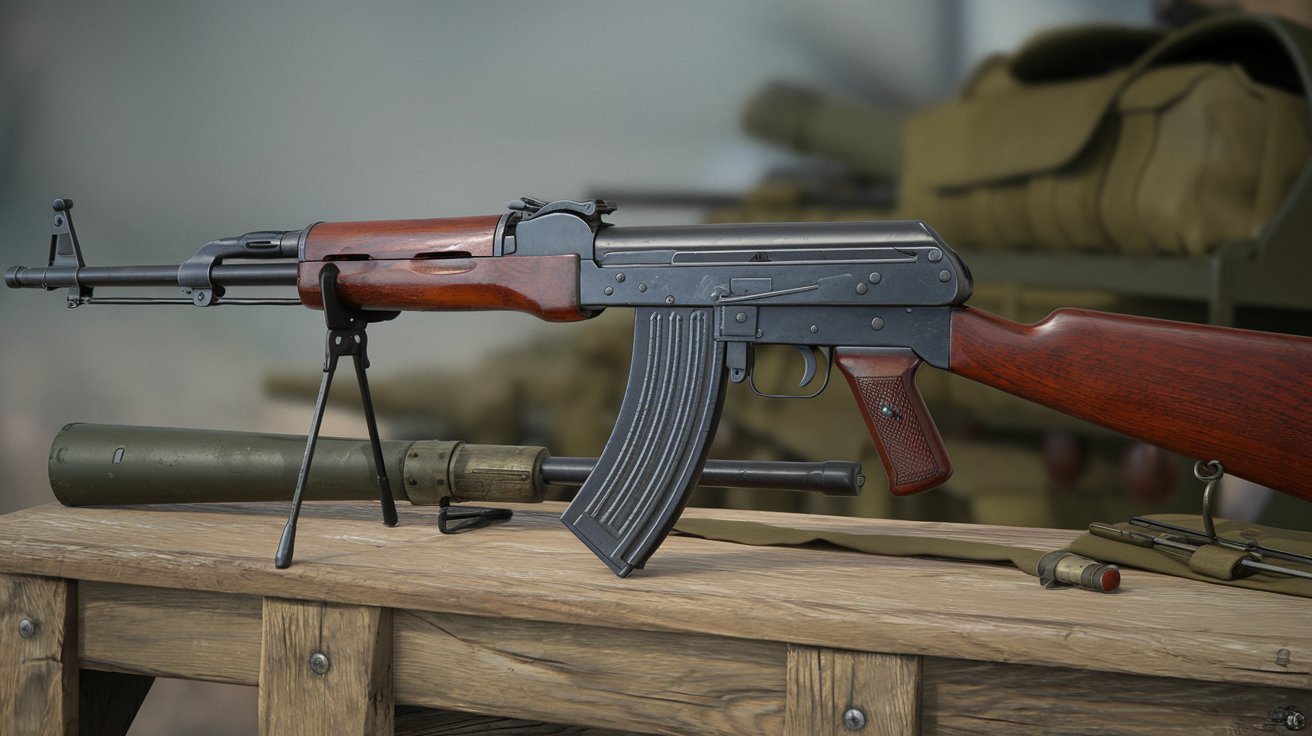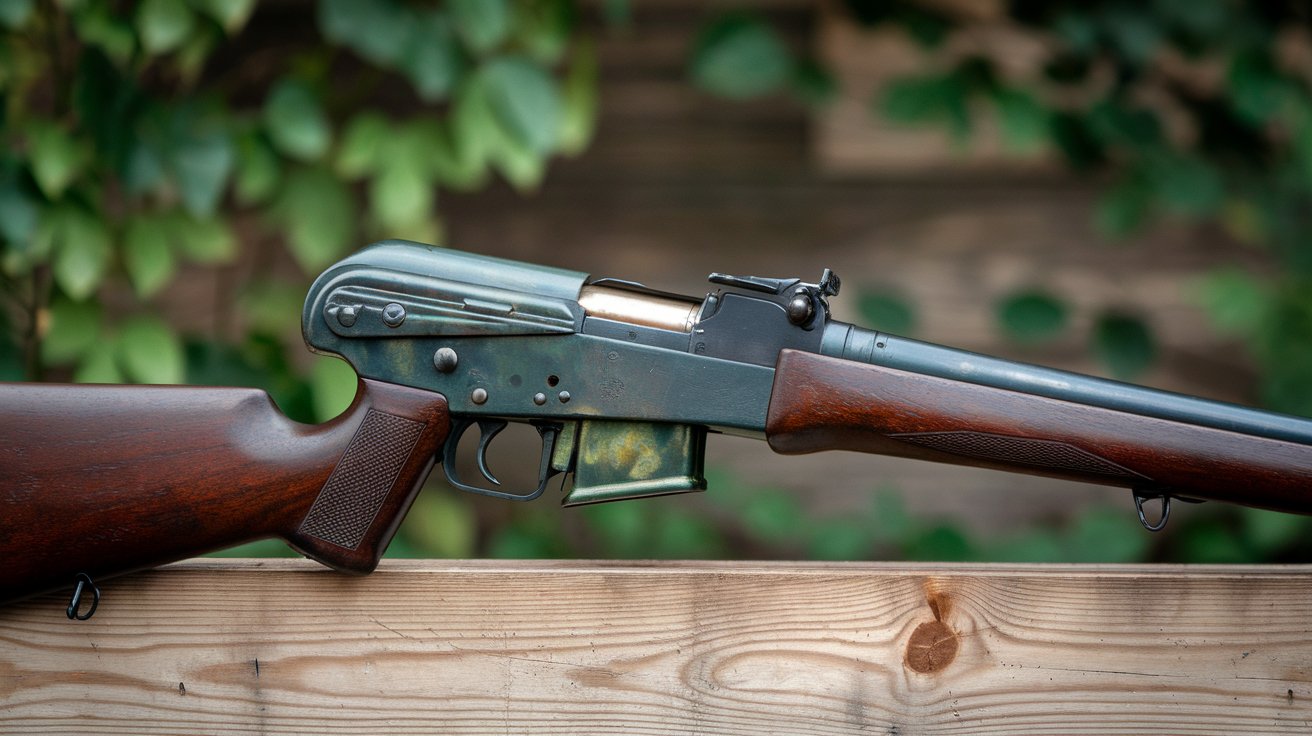
The Lee Enfield Jungle Carbine, officially designated as the No. 5 Mk I, represents one of the most distinctive and sought-after military rifles among collectors in the United States today. Introduced in 1944 for jungle warfare operations in the Pacific and Southeast Asia, this lightweight carbine variant of the iconic Lee Enfield series features a shortened barrel, flash hider, and distinctive rubber recoil pad. With production numbers limited to approximately 251,000 units between 1944 and 1947, authentic examples command premium prices in 2026’s collector market.
Historical Development of the Lee Enfield No. 5 Mk I Jungle Carbine
The Lee Enfield Jungle Carbine emerged from British military requirements during World War II for a more portable rifle suited to the dense vegetation and close-quarters combat prevalent in Pacific theater operations. Traditional Lee Enfield rifles measured over 44 inches in length, making them cumbersome in jungle environments where mobility was paramount. British ordnance engineers began development in 1943, creating a shortened variant specifically designed for paratroopers, commandos, and forces engaged in jungle warfare operations throughout Burma, Malaya, and the Pacific islands.
The final design featured a barrel length of just 18.7 inches, compared to the 25-inch barrel of the standard No. 4 Mk I rifle. This reduction in length decreased the overall weapon length to 39.5 inches and reduced weight to approximately 7 pounds. The distinctive conical flash hider became the most recognizable feature, designed to reduce muzzle flash in low-light jungle conditions. Production commenced at ROF Fazakerley in 1944, with the rifle officially entering service as the Rifle, No. 5, Mk I in March 1944.
Combat Service and Operational History
The Jungle Carbine saw extensive combat use beginning in late 1944 throughout Southeast Asian campaigns. British, Australian, and Commonwealth forces deployed these rifles in Burma against Japanese forces, where the weapon’s compact dimensions proved advantageous in dense jungle terrain. However, operational reports soon identified a significant issue: the rifle exhibited wandering zero problems, where point of impact would shift unpredictably, compromising accuracy. This issue, combined with increased recoil due to the lighter weight and shorter barrel, led to mixed reviews from frontline troops who appreciated the portability but questioned reliability.
Despite these challenges, the No. 5 Mk I remained in service through the end of World War II and continued deployment through the Malayan Emergency (1948-1960) and other colonial conflicts. British forces officially withdrew the rifle from frontline service in 1947 due to the accuracy concerns, though reserve units and Commonwealth nations continued utilizing existing stocks well into the 1960s. Today, the combat history and relatively brief service life contribute to the Jungle Carbine’s collector appeal in the United States market.
Production Numbers and Manufacturing Details
Total Jungle Carbine production reached approximately 251,000 units manufactured between 1944 and 1947, making authentic examples significantly rarer than other Lee Enfield variants. ROF Fazakerley produced the vast majority, with markings typically showing “ROF(F)” and a maltese cross. Some rifles bear BSA Shirley markings from post-war refurbishment programs. The limited production run, combined with wartime destruction, post-service arsenal conversions, and sporterization by civilian owners, means original configuration examples represent only a fraction of total production numbers.
Manufacturing specifications included distinctive features beyond just barrel length. The receiver and metalwork were lightened through strategic material removal, the stock featured a distinctive shortened profile with a rubber recoil pad, and the rear sight was repositioned forward on the receiver body. Serial numbers typically fall within specific ranges depending on production year, with 1944 examples starting around the A-series and progressing through 1947. Understanding these manufacturing details proves essential for collectors attempting to authenticate genuine Jungle Carbines versus post-war conversions and replicas.
Identifying Authentic Jungle Carbines Versus Fakes
The collector market in 2026 contains numerous fake Jungle Carbines created from modified No. 4 rifles, making authentication skills essential for buyers. These conversions typically involve cutting down a standard No. 4 Mk I barrel, adding an aftermarket flash hider, and installing a rubber buttpad. While superficially similar, these conversions lack the specific dimensional and manufacturing characteristics of genuine Lee Enfield No. 5 Mk I rifles. Understanding key identification points prevents costly purchasing mistakes in a market where authentic examples command $1,200 to $2,800 depending on condition.
The proliferation of conversions stems from the significant price difference between standard No. 4 rifles ($400-$700) and authentic Jungle Carbines. Unscrupulous sellers have created thousands of fake examples over the decades, some executed with sufficient skill to fool inexperienced collectors. The United States market particularly suffers from this issue, as many surplus rifles were imported and modified domestically. Genuine Jungle Carbines possess specific features that conversions cannot replicate without extensive machining and parts replacement.
Critical Authentication Points
The most reliable authentication method involves examining the receiver markings and serial number. Genuine No. 5 Mk I rifles are marked “No. 5 Mk I” on the left side of the receiver, along with manufacturer markings showing ROF(F) or BSA Shirley. The serial number should fall within documented production ranges: A-series through approximately C-series for wartime production. Rifles marked “No. 4 Mk I” or showing ground-off markings indicate conversions. The receiver itself differs dimensionally from No. 4 rifles, being slightly shorter and featuring lightening cuts not present on standard models.
The barrel length measurement provides definitive evidence: authentic Jungle Carbines measure exactly 18.7 inches from breech face to muzzle crown, before the flash hider. Conversions often measure differently due to imprecise cutting. The flash hider itself should be permanently attached via interrupted thread and pinned, not simply screwed on. The rear sight positioning represents another critical identifier—on genuine No. 5 rifles, the rear sight sits further forward on the receiver than No. 4 rifles, requiring specific receiver machining that conversions rarely replicate accurately. The stock should show specific dimensional differences and lightening cuts in the wood that differ from standard No. 4 stocks.
Common Conversion Indicators
Several telltale signs immediately identify converted rifles masquerading as Jungle Carbines. Ground or overstamped markings on the receiver suggest alterations, as authentic rifles have crisp, clear factory stampings. The wood-to-metal fit often appears poor on conversions, with gaps or mismatched inletting where original No. 4 stocks were modified rather than replaced with proper No. 5 stocks. The buttpad attachment method differs significantly: genuine rifles feature a specific mounting system integrated into the buttstock design, while conversions typically show aftermarket pads screwed or glued onto modified No. 4 stocks.
The barrel band configuration and handguard provide additional authentication opportunities. Genuine Jungle Carbines use a specific single barrel band design that differs from No. 4 rifles, with the handguard terminating at a precise point relative to the muzzle. Conversions often retain No. 4 hardware or show evidence of modification. Examining the metal finish and patina under magnification can reveal recent machining or grinding marks inconsistent with 75+ year old military rifles. Professional authentication services, available through specialized gunsmiths and collectors’ organizations, charge $50-$150 for detailed examinations that can save thousands in purchasing mistakes.
Technical Specifications and Performance Characteristics
The Lee Enfield Jungle Carbine chambered in .303 British delivers distinctive ballistic performance due to its abbreviated barrel length. The 18.7-inch barrel produces muzzle velocities approximately 150-200 feet per second slower than the 25-inch No. 4 rifle, with standard 174-grain ball ammunition achieving roughly 2,250 fps compared to 2,450 fps from full-length rifles. This velocity reduction minimally impacts effective combat range for the .303 cartridge, which remains lethal beyond 500 yards though practical accuracy limitations emerge sooner due to the shortened sight radius and increased recoil.
The killing range of the .303 rifle extends well beyond 800 yards with proper shot placement, though the Jungle Carbine’s design optimizes performance within 300 yards—appropriate for jungle warfare scenarios. The .303 British cartridge delivers approximately 2,400 foot-pounds of muzzle energy from the carbine barrel, sufficient for taking large game and maintaining military effectiveness. Recoil energy increases noticeably compared to standard rifles due to the reduced weight, measuring approximately 17-18 foot-pounds perceived recoil versus 14-15 foot-pounds for No. 4 rifles. The distinctive rubber recoil pad helps mitigate but cannot eliminate this increased recoil impulse.
Accuracy and the Wandering Zero Problem
The infamous wandering zero issue plagued Jungle Carbines throughout their service life, with rifles exhibiting unpredictable point-of-impact shifts that frustrated shooters and ultimately contributed to the rifle’s withdrawal from service. Various theories explain this phenomenon, including harmonic vibrations in the shortened barrel, flex in the lightened receiver, and stock pressure changes affecting barrel bedding. Modern testing in 2026 suggests the issue stems from multiple factors interacting rather than a single design flaw, with individual rifles exhibiting varying severity.
Properly maintained Jungle Carbines can achieve 3-4 MOA accuracy at 100 yards with quality ammunition, though some examples perform worse. The shortened sight radius of approximately 19 inches (compared to 27 inches on No. 4 rifles) makes precise shooting more challenging, as small alignment errors translate to greater point-of-impact changes at distance. Modern shooters report that handloaded ammunition tailored to individual rifles can improve accuracy over military surplus ammunition, with careful attention to stock bedding and barrel harmonics yielding better results. However, the rifle fundamentally remains a close-to-medium range weapon rather than a precision instrument.
Current Market Values and Availability in 2026
The Lee Enfield No. 5 Mk I price in the United States market has appreciated significantly throughout the 2020s, reflecting both collector demand and limited authentic supply. As of 2026, verified original Jungle Carbines in good to very good condition command $1,400 to $2,200, with excellent examples reaching $2,500-$2,800. Rifles showing original arsenal finish, matching numbers, and complete original configuration achieve premium prices. Sporterized examples or those missing original components sell for $900-$1,400 depending on extent of modifications. The market has stabilized following rapid appreciation between 2018-2023, when prices nearly doubled.
Availability remains limited through traditional firearms dealers, with most authentic examples changing hands through specialized military surplus dealers, collector forums, and auction houses like Rock Island Auction Company and James D. Julia. Major gun shows occasionally feature Jungle Carbines, though buyers must exercise authentication diligence. Online marketplaces including GunBroker and GunsAmerica typically list 15-30 rifles at any given time, with authentic examples selling within days at fair market prices. Fraudulent conversions appear regularly at $800-$1,200, targeting uninformed buyers—reinforcing the importance of authentication knowledge before purchasing.
Parts, Accessories, and Bayonet Availability
The market for Lee Enfield Jungle Carbine parts has expanded in 2026 through specialized suppliers including Numrich Gun Parts, Sarco Inc., and Liberty Tree Collectors. Original military parts command premium prices due to limited supply: original flash hiders sell for $150-$250, rubber buttplates for $40-$80, and complete original stocks for $200-$350. Reproduction parts have improved in quality, with several manufacturers offering flash hiders, buttplates, and handguards that closely match original specifications at 50-70% lower costs. However, collectors prefer all-original rifles, making period-correct parts valuable for restoration projects.
The Lee Enfield No. 5 Mk I jungle carbine bayonet represents a particularly sought-after accessory, with original examples scarce in 2026. The No. 5 rifle utilized the No. 5 Mk I bayonet, a shortened version of the standard spike bayonet measuring approximately 8 inches overall. These bayonets with original scabbards sell for $200-$400 depending on condition, with many rifles separated from their bayonets during post-war surplus sales. The bayonet for sale market includes both original military examples and reproduction versions ($60-$100) manufactured in India and Pakistan. Collectors seeking complete, authentic rifle-bayonet combinations should expect to pay premium prices reflecting the rarity of matched sets.
Shooting and Collecting Lee Enfield Jungle Carbines Today
Modern shooters in 2026 appreciate the Jungle Carbine for its historical significance and distinctive shooting characteristics, though practical considerations differ from collecting priorities. The rifle remains fully functional with readily available .303 British ammunition, with factory loads from Hornady, PPU (Prvi Partizan), and S&B costing $1.20-$1.80 per round. Surplus ammunition availability has diminished significantly compared to previous decades, with remaining stocks commanding collector prices. The Jungle Carbine’s compact dimensions make it enjoyable for informal target shooting and hunting medium game within appropriate ranges.
From a collecting perspective, the No. 5 Mk I represents an essential variant for Lee Enfield enthusiasts pursuing complete collections. The rifle’s distinctive appearance, limited production, and historical context make it desirable despite higher acquisition costs compared to standard No. 4 rifles. Collectors in 2026 increasingly focus on maintaining rifles in original military configuration rather than sporterizing, reversing trends from previous decades. The investment potential remains solid, with quality examples appreciating 3-5% annually over the past five years, though collectors should prioritize historical interest over pure financial speculation.
Legal Considerations for United States Owners
The Lee Enfield Jungle Carbine enjoys favorable legal status throughout the United States as a manually-operated bolt-action rifle predating modern assault weapon classifications. Federal law imposes no special restrictions on ownership beyond standard firearms regulations requiring purchasers to be 18 years or older and pass NICS background checks for dealer transfers. State laws vary, with California, Connecticut, Massachusetts, New Jersey, and New York imposing additional regulations though generally permitting bolt-action rifle ownership without special licensing beyond standard firearms permits.
The rifle’s flash hider does not constitute a regulated feature under federal law or most state laws when attached to a manually-operated bolt-action rifle, unlike semi-automatic rifles where flash hiders may trigger assault weapon classifications in restrictive states. The 10-round detachable magazine capacity exceeds limits in California, Connecticut, and other states with magazine restrictions, though enforcement varies and some jurisdictions exempt manually-operated rifles. Collectors should research specific state and local regulations before purchasing, with most Jungle Carbines freely transferable in 42+ states without restrictions beyond standard firearms laws. C&R (Curio & Relic) status applies to rifles manufactured before 1956, potentially allowing interstate transfer to collectors holding Type 03 Federal Firearms Licenses.
Alternative Variants and Related Rifles
Collectors interested in Jungle Carbines frequently explore related variants within the Lee Enfield family and alternative carbine configurations. The Australian No. 6 Mk I represents an experimental variant that shared design goals with the No. 5, featuring similar shortened dimensions but different detail specifications. Only prototypes exist, making these extremely rare collector items valued at $15,000+ when available. The No. 4 Mk I(T) sniper rifle, while not a carbine, shares the No. 4 receiver and represents another specialized variant commanding collector interest.
The Lee Enfield Carbine designation historically applied to earlier variants including the Mk I Cavalry Carbine (1896) and various Artillery Carbine models predating World War II. These earlier carbines differ substantially from the No. 5 Jungle Carbine in mechanical design and action type, though sharing the carbine concept. Post-war commercial sporting conversions, sometimes marketed as Jungle Carbines in .308 Winchester, represent non-military custom rifles that hold minimal collector value despite functional utility. Authentic military rifles remain chambered in .303 British exclusively, with .308 chamberings indicating commercial rechambering that diminishes collector value while potentially creating a practical hunting rifle.
Airsoft and Replica Options
The Lee Enfield Jungle Carbine airsoft replica market remains limited in 2026, with few manufacturers producing accurate No. 5 Mk I replicas. S&T Airsoft previously manufactured a spring-powered replica that sold for $150-$200, though production appears discontinued with remaining inventory commanding premium prices. Most Lee Enfield airsoft rifles replicate the No. 4 Mk I configuration rather than the shortened Jungle Carbine variant. This scarcity frustrates historical reenactors and airsoft enthusiasts seeking period-accurate representations of Pacific theater weaponry.
Denix and other manufacturers produce non-firing display replicas of Lee Enfield rifles, though specific Jungle Carbine versions remain rare. These replicas serve collectors unable to acquire or afford authentic rifles, with prices ranging $120-$200 for quality reproductions. The limited replica availability reflects the Jungle Carbine’s relatively obscure status compared to more famous military rifles like the M1 Garand or Kar98k. Collectors seeking authentic handling characteristics without live-fire functionality face challenges locating accurate reproductions, often settling for deactivated military surplus rifles that retain original specifications but cannot chamber live ammunition.
Maintenance and Preservation Guidelines
Proper maintenance ensures Jungle Carbines remain functional and preserve collector value for future generations. The .303 British cartridge uses corrosive Berdan primers in military surplus ammunition, requiring immediate cleaning after shooting to prevent bore pitting. Modern non-corrosive commercial ammunition eliminates this concern, though thorough cleaning remains advisable. The cleaning procedure involves disassembly following standard Lee Enfield protocols: remove the bolt, clean the bore from breech to muzzle using appropriate bronze brushes and patches, and lubricate the action with quality gun oil. The shortened barrel cleans more quickly than full-length rifles, though the flash hider requires attention to prevent carbon buildup.
Storage considerations for collector-grade Jungle Carbines emphasize preservation over shooting functionality. Climate-controlled environments maintaining 40-50% relative humidity prevent wood warping and metal corrosion. Original military finishes should be preserved rather than refinished, as restoration diminishes collector value even when professionally executed. The rubber buttpad requires special attention, as the original material degrades over decades, becoming brittle or sticky. Preservation techniques include storing rifles supported at multiple points to prevent stock warping, using archival-quality protective wrapping for long-term storage, and periodic inspection for emerging condition issues. Collectors should avoid aggressive cleaning that removes original finish patina, as honest wear enhances rather than diminishes value for military surplus rifles.
Related video about lee enfield jungle carbine
This video complements the article information with a practical visual demonstration.
FAQ – Common Questions
Are jungle carbines rare?
Yes, authentic Lee Enfield Jungle Carbines are relatively rare with only approximately 251,000 units manufactured between 1944-1947. This limited production, combined with wartime losses, post-service destruction, and sporterization by civilian owners, means genuine examples in original configuration represent a small fraction of production numbers. The United States market contains many fake conversions created from standard No. 4 rifles, making authenticated original Jungle Carbines particularly scarce. In 2026, collectors estimate fewer than 50,000 authentic examples survive worldwide in collectible condition, with perhaps 15,000-20,000 in the United States market.
How many jungle carbines were made?
Total Jungle Carbine production reached approximately 251,000 rifles manufactured primarily at ROF Fazakerley between 1944 and 1947, with some examples produced at BSA Shirley. Production commenced in March 1944 for deployment in the Pacific theater and continued through 1947 despite the rifle’s withdrawal from frontline service. This relatively modest production run, compared to millions of standard Lee Enfield rifles produced during the same era, contributes significantly to the Jungle Carbine’s collector value and market scarcity. Serial number ranges span from early A-series through approximately C-series, providing authentication guidance for collectors.
Was the Jungle Carbine used in WWII?
Yes, the Lee Enfield Jungle Carbine entered combat service in late 1944 during World War II, primarily in Southeast Asian operations against Japanese forces. British, Australian, and Commonwealth troops deployed these rifles throughout Burma, Malaya, and Pacific island campaigns where the compact dimensions proved advantageous in dense jungle terrain. However, most Jungle Carbine service occurred during post-WWII conflicts including the Malayan Emergency (1948-1960) and various colonial operations. The rifle’s late introduction meant limited WWII service, though historical documentation confirms combat use during the final year of the Pacific War in 1944-1945.
What is the killing range of a 303 rifle?
The .303 British cartridge remains lethal beyond 800-1,000 yards with proper shot placement, though practical combat effectiveness varies by rifle configuration. The Jungle Carbine’s 18.7-inch barrel produces muzzle velocities around 2,250 fps with 174-grain military ball ammunition, delivering approximately 2,400 foot-pounds of energy—sufficient for taking large game and military effectiveness within 300-500 yards. Maximum effective range depends on shooter skill and environmental conditions, with the Jungle Carbine’s shortened sight radius and increased recoil limiting practical accuracy compared to full-length rifles. Military doctrine considered the .303 British effective against personnel targets to 600 yards from standard rifles and approximately 400 yards from carbine variants.
How can I tell if my Jungle Carbine is authentic or a conversion?
Authenticating a genuine Jungle Carbine requires examining multiple identification points. Check receiver markings for “No. 5 Mk I” designation with ROF(F) or BSA manufacturer stamps—anything marked “No. 4 Mk I” indicates a conversion. Measure barrel length precisely: authentic examples measure exactly 18.7 inches from breech to muzzle crown before the flash hider. Examine the rear sight position, which sits further forward on the receiver than No. 4 rifles. Inspect the stock for specific lightening cuts and proper rubber buttpad mounting. The receiver itself should show dimensional differences from No. 4 rifles, being slightly shorter with specific lightening cuts. Professional authentication services charge $50-$150 and can prevent costly purchasing mistakes in a market where conversions outnumber authentic rifles.
What is the current market value of a Lee Enfield Jungle Carbine in 2026?
In 2026, authentic Lee Enfield No. 5 Mk I Jungle Carbines command $1,400-$2,200 for rifles in good to very good condition within the United States market. Excellent examples with original finish, matching numbers, and complete original configuration reach $2,500-$2,800, while sporterized rifles or those missing original components sell for $900-$1,400. The market has stabilized following rapid appreciation during 2018-2023. Bayonets sell separately for $200-$400 with scabbards, while original parts like flash hiders ($150-$250) and stocks ($200-$350) command premium prices. Fake conversions unfortunately sell at $800-$1,200, targeting uninformed buyers—making authentication knowledge essential before purchasing.
| Specification | Details | Collector Significance |
|---|---|---|
| Official Designation | Rifle, No. 5, Mk I | Distinguishes authentic military rifles from conversions |
| Production Period | 1944-1947 (approx. 251,000 units) | Limited production increases rarity and value |
| Barrel Length | 18.7 inches (vs 25 inches No. 4) | Critical measurement for authentication |
| Overall Length | 39.5 inches | Compact dimensions define jungle carbine role |
| Weight | Approximately 7 pounds | Lightened construction increases recoil |
| Chambering | .303 British exclusively | Other calibers indicate commercial conversions |
| Muzzle Velocity | ~2,250 fps (174gr ball) | Reduced from full-length rifles but combat effective |
| 2026 Market Value | $1,400-$2,800 (condition dependent) | Premium prices reflect collector demand and scarcity |
| Primary Manufacturer | ROF Fazakerley (ROF(F) marking) | Markings essential for authentication |
| Distinctive Features | Conical flash hider, rubber buttpad, forward rear sight | Multiple authentication points prevent fraud |