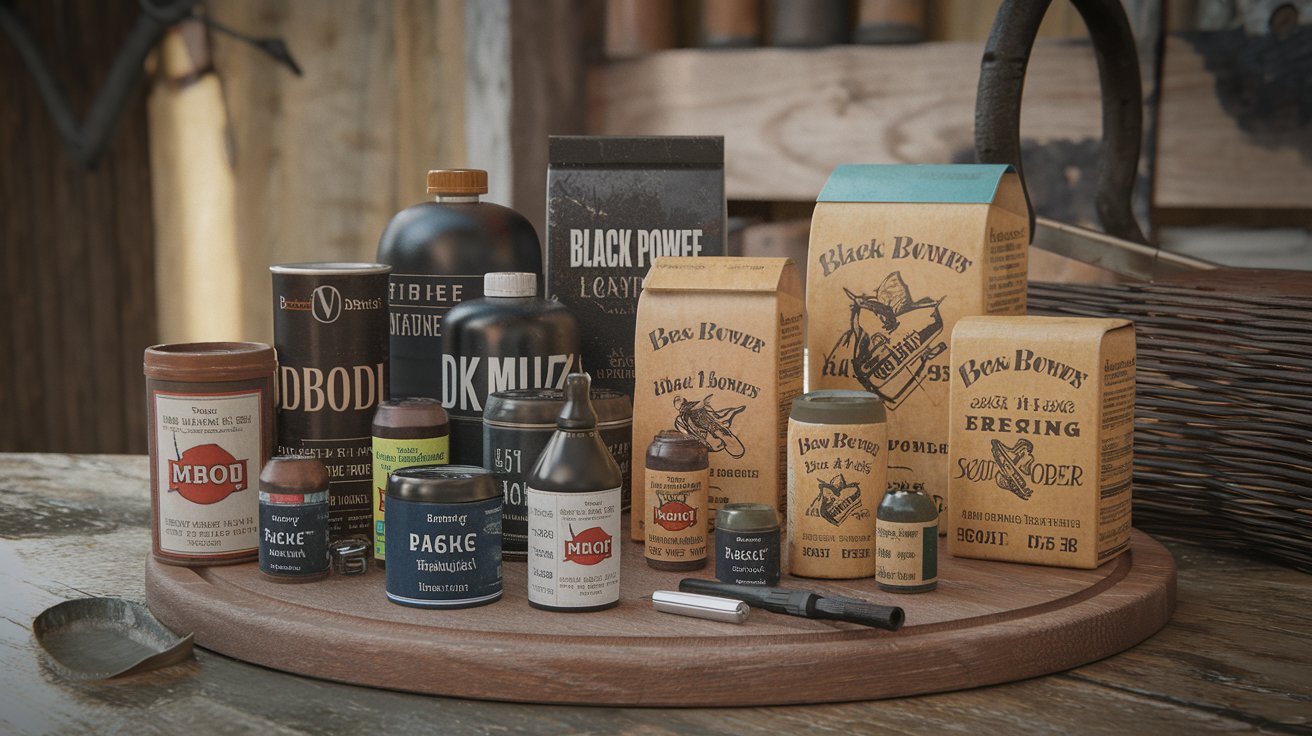
The question of what powder should be used in a muzzleloader has a definitive answer: only black powder or approved black powder substitutes are safe for use in muzzleloading firearms. Using smokeless powder in a muzzleloader can cause catastrophic barrel rupture, severe injury, or death. This fundamental safety principle has remained unchanged since the earliest days of muzzleloading firearms and continues to be critical for safe shooting practices in 2026 across the United States.
The Only Safe Powder Type for Muzzleloaders
Black powder is the only traditional powder that should ever be used in a muzzleloader, along with modern black powder substitutes specifically designed for muzzleloading firearms. Black powder, also known as gunpowder, is a mechanical mixture of potassium nitrate (saltpeter), charcoal, and sulfur. This composition creates a controlled, progressive burn rate that muzzleloader barrels are designed to handle safely. The pressure curve generated by black powder ignition is fundamentally different from modern smokeless powders.
Smokeless powder, which is used in modern cartridge firearms, generates dramatically higher pressures that muzzleloader barrels cannot safely contain. While a modern rifle barrel is designed to handle pressures exceeding 50,000 PSI, traditional muzzleloader barrels are engineered for the 10,000-15,000 PSI range that black powder produces. Using smokeless powder in a muzzleloader will cause the barrel to explode violently, sending shrapnel in all directions and causing catastrophic injury to the shooter and bystanders.
Understanding Black Powder Chemistry and Properties
Black powder has been the standard propellant for muzzleloaders for over 1,000 years, and its chemistry remains essentially unchanged. The typical ratio is 75% potassium nitrate, 15% charcoal, and 10% sulfur by weight. When ignited, this mixture undergoes a deflagration reaction rather than a detonation, meaning it burns rapidly but in a controlled manner. This deflagration produces approximately 3,000 cubic feet of gas per pound of powder, creating the pressure needed to propel a projectile down the barrel.
The granulation size of black powder significantly affects its burn rate and application. FFFFg (4F) is the finest granulation, used primarily for priming pans on flintlock firearms. FFFg (3F) is commonly used in smaller caliber rifles and pistols up to .50 caliber. FFg (2F) is the standard for .50 caliber and larger rifles, while Fg (1F) is reserved for large bore rifles and cannons. Each granulation burns at a different rate, with finer powders burning faster and coarser powders burning more slowly and progressively.
Approved Black Powder Substitutes
Since the 1970s, manufacturers have developed several black powder substitute products that offer improved performance and convenience while maintaining safe pressure levels for muzzleloaders. These substitutes were created to address some of black powder’s limitations, including corrosive fouling, storage restrictions, and shipping regulations. All approved substitutes are specifically formulated to produce pressure curves compatible with muzzleloader design specifications.
Pyrodex: The Original Black Powder Substitute
Pyrodex was introduced in 1975 as the first widely successful black powder substitute and remains popular in 2026. Manufactured by Hodgdon Powder Company, Pyrodex produces similar velocities to black powder but with less corrosive fouling and greater volume efficiency. Pyrodex comes in several granulations: Pyrodex RS (Rifle/Shotgun) equivalent to FFg black powder, Pyrodex P (Pistol) equivalent to FFFg, and Pyrodex Select for optimal performance in modern inline muzzleloaders. One significant advantage is that Pyrodex requires less frequent cleaning between shots during extended shooting sessions.
Triple Seven and Other Modern Substitutes
Triple Seven (777), also from Hodgdon, represents the next generation of black powder substitutes introduced in 2002. It produces approximately 15% more energy than an equal volume of black powder while generating significantly less fouling. Triple Seven is available in loose granular form and convenient pellet configurations. Other notable substitutes include BlackHorn 209, which is specifically designed for inline muzzleloaders using 209 shotgun primers, and Clean Shot, which emphasizes reduced fouling. All these substitutes are formulated to maintain safe pressure levels compatible with muzzleloader construction and are legal for use in most hunting seasons across the United States.
Why Smokeless Powder Is Extremely Dangerous
The fundamental reason smokeless powder must never be used in a muzzleloader relates to the dramatically different burn characteristics and pressure generation rates. Smokeless powder undergoes a chemical reaction called nitrocellulose decomposition, which produces gas at an exponentially faster rate than black powder’s deflagration. This creates a pressure spike that can reach 60,000 PSI or higher in milliseconds, far exceeding what any muzzleloader barrel can withstand.
Muzzleloader barrels, whether traditional side-lock designs or modern inline actions, are manufactured with steel specifications designed for black powder pressures only. The steel thickness, heat treatment, and metallurgy are optimized for the 10,000-15,000 PSI range. When subjected to smokeless powder pressures, the barrel steel cannot contain the forces, resulting in catastrophic failure. This typically manifests as the barrel splitting lengthwise, bulging near the breech, or completely separating into fragments. Multiple fatalities and severe injuries occur annually in the United States from individuals mistakenly or recklessly using smokeless powder in muzzleloaders.
Muzzleloader Powder Regulations by State
Across the United States, state wildlife agencies strictly regulate which propellants are legal during muzzleloader hunting seasons. As of 2026, all 50 states mandate that only black powder or approved black powder substitutes may be used during primitive weapons or muzzleloader-only hunting seasons. These regulations exist both for safety reasons and to maintain the traditional nature of muzzleloader hunting as a more challenging and limited-range pursuit compared to modern rifle seasons.
Some states have specific granulation requirements or prohibit certain substitute formulations. For example, several western states require loose powder rather than pelletized forms during traditional muzzleloader seasons, while allowing pellets during any-weapon seasons. States like Colorado and Montana distinguish between traditional muzzleloaders (using external ignition systems and loose black powder or substitutes) and inline muzzleloaders (using enclosed primers and potentially allowing more modern substitutes). Hunters must verify current regulations with their state wildlife agency before each season, as requirements can change annually.
Proper Powder Selection for Different Muzzleloader Types
The type of muzzleloader you own significantly influences which powder and granulation will deliver optimal performance. Traditional side-lock rifles with flintlock or percussion ignition systems typically perform best with genuine black powder in FFg or FFFg granulations, depending on caliber. These ignition systems were designed around black powder’s ignition characteristics and may experience inconsistent ignition with some substitute powders.
Modern inline muzzleloaders with 209 primer ignition systems offer greater flexibility and often perform exceptionally well with substitute powders like Triple Seven or BlackHorn 209. These firearms feature stronger construction, improved sealing, and more powerful ignition systems that reliably ignite substitute powders. Inline muzzleloaders also commonly use pelletized powder charges, which provide consistent volumetric measurements and eliminate the need for powder measures. However, even these modern designs must never use smokeless powder.
Safe Powder Storage and Handling Practices
Black powder is classified as an explosive by the Bureau of Alcohol, Tobacco, Firearms and Explosives (ATF) and requires specific storage considerations. Unlike smokeless powder, which is classified as a flammable solid, black powder can ignite from sparks, static electricity, or impact. Proper storage requires keeping powder in original containers, stored in cool, dry locations away from heat sources, open flames, and incompatible materials. Many jurisdictions limit the quantity of black powder that can be stored in residential areas, typically 50 pounds or less.
When handling black powder or substitutes, never smoke or work near open flames. Use non-sparking tools, such as brass or copper powder measures, rather than steel implements that could create ignition sparks. Never pour powder directly from a container into a firearm; always use an appropriate powder measure to dispense charges. Keep powder containers closed except when actively measuring charges, and never have more than one powder container open simultaneously to prevent dangerous mix-ups. Modern pelletized powder charges offer enhanced safety during field use since they eliminate loose powder handling.
Calculating Correct Powder Charges
Determining the appropriate powder charge for your muzzleloader requires consulting the manufacturer’s recommendations and working up loads carefully. Most modern muzzleloaders come with detailed manuals specifying minimum and maximum powder charges for various projectile types. Traditional side-lock rifles often perform well with charges ranging from 70 to 120 grains of FFg black powder for .50 caliber rifles, while inline muzzleloaders may safely use charges up to 150 grains of volumetric equivalent substitute powder.
Always start with the minimum recommended charge and work upward in 10-grain increments while monitoring accuracy and signs of excessive pressure. Signs of overpressure include difficult bolt opening, primer cratering, case head expansion (in modern inline muzzleloaders using brass breech plugs), or unusually heavy recoil. Accuracy typically peaks at a specific charge weight, and exceeding this optimal charge rarely improves performance while increasing recoil and fouling. Record keeping is essential; maintain a shooting log documenting powder type, charge weight, projectile, and resulting accuracy for future reference.
Cleaning Requirements for Black Powder Shooting
Black powder and most substitutes produce corrosive fouling that requires prompt and thorough cleaning after shooting. Black powder combustion creates potassium sulfate and other salts that attract moisture and rapidly corrode steel surfaces if not removed. Immediately after shooting, muzzleloaders should be cleaned with hot water or commercial black powder solvents specifically designed to dissolve powder residue and neutralize corrosive salts.
The cleaning process involves removing the barrel from the stock if possible, then using a cleaning jag and patches soaked in hot soapy water or solvent to scrub the bore thoroughly. Multiple wet patches should be run through the bore until they emerge clean, followed by dry patches to remove all moisture. After drying, apply a rust-preventive oil or grease to all metal surfaces. The breech plug, nipple or vent liner, and other ignition components require special attention and periodic removal for detailed cleaning. Modern substitutes like Triple Seven and BlackHorn 209 produce significantly less corrosive fouling than traditional black powder, but still require proper cleaning protocols to prevent barrel damage.
Common Muzzleloader Powder Mistakes and Misconceptions
One dangerous misconception involves assuming that reduced charges of smokeless powder might be safe in muzzleloaders. This is absolutely false and has resulted in numerous catastrophic failures. Even small quantities of smokeless powder can generate pressures exceeding safe limits due to the confined space and rapid burn rate in muzzleloader barrels. There is no safe amount of smokeless powder for use in any muzzleloader, regardless of construction quality or age.
Another common error involves mixing different powder types or brands within a single charge. Never combine black powder with substitutes, or mix different substitute brands, as the burn rate interactions are unpredictable and potentially dangerous. Use only one powder type per charge, and ensure all powder is thoroughly cleaned from the bore before switching powder types. Some shooters mistakenly believe that because smokeless powder is used in modern firearms, it must be superior to black powder. However, black powder and approved substitutes are superior for muzzleloaders specifically because their pressure characteristics match the barrel design specifications.
Future of Muzzleloader Propellants in 2026 and Beyond
The muzzleloader propellant industry continues evolving with research focused on cleaner-burning formulations and improved consistency. Several manufacturers are developing next-generation substitutes that promise to reduce fouling even further while maintaining or improving ballistic performance. Environmental considerations are driving innovation, with efforts to reduce heavy metal content in primers and develop more environmentally friendly propellant formulations that remain compatible with traditional muzzleloader designs.
Technology advances in inline muzzleloader design may eventually permit specialized propellants with different pressure curves, but these would require fundamentally redesigned actions and barrels with enhanced metallurgy. Any such developments will be clearly labeled and marketed specifically for compatible firearms only. Traditional black powder will continue serving the historical reenactment and traditional muzzleloading communities, while modern substitutes will dominate the hunting and target shooting markets. Regardless of future innovations, the fundamental principle remains unchanged: only propellants specifically approved for muzzleloader use are safe, and smokeless powder will never be appropriate for traditional muzzleloading firearms.
Related video about what powder is the only kind that should be used in a muzzleloader?
This video complements the article information with a practical visual demonstration.
FAQ – Common Questions
What is the only type of powder that should be used in a muzzleloader?
Black powder or approved black powder substitutes are the only safe propellants for muzzleloaders. Traditional black powder (a mixture of potassium nitrate, charcoal, and sulfur) has been used for centuries and remains the standard. Modern substitutes like Pyrodex, Triple Seven, and BlackHorn 209 are specifically formulated to produce safe pressure levels compatible with muzzleloader barrel construction. Smokeless powder must never be used as it generates catastrophically high pressures that cause barrel rupture and severe injury.
Can I use Pyrodex instead of black powder in my muzzleloader?
Yes, Pyrodex is a safe and approved substitute for black powder in muzzleloaders. Introduced in 1975, Pyrodex produces similar ballistic performance to black powder while offering advantages like less corrosive fouling and easier cleanup. It comes in different granulations equivalent to black powder sizes: Pyrodex RS for rifles (equivalent to FFg), Pyrodex P for pistols (equivalent to FFFg), and Pyrodex Select for inline muzzleloaders. Always follow manufacturer recommendations for charge weights and ensure your specific muzzleloader is approved for substitute powders.
What kind of powder can cause serious injury if used in a muzzleloader?
Smokeless powder will cause catastrophic failure and serious injury or death if used in a muzzleloader. Smokeless powder generates pressures exceeding 50,000 PSI, while muzzleloader barrels are designed for only 10,000-15,000 PSI produced by black powder. Using smokeless powder causes the barrel to explode violently, sending metal fragments in all directions. This mistake has resulted in numerous fatalities and severe injuries. There is no safe amount of smokeless powder that can be used in any muzzleloader, regardless of construction quality.
What is the best powder to use in a modern inline muzzleloader?
Modern inline muzzleloaders perform exceptionally well with specialized substitutes like BlackHorn 209, Triple Seven, or Pyrodex pellets. BlackHorn 209 is specifically designed for inline muzzleloaders using 209 shotgun primers and produces excellent accuracy with minimal fouling. Triple Seven offers approximately 15% more energy than equivalent black powder volumes while generating less residue. The best powder depends on your specific firearm, intended use, and local hunting regulations. Always start with manufacturer recommendations and work up loads carefully while monitoring accuracy and pressure signs.
How should black powder be stored safely at home?
Black powder must be stored in original containers in a cool, dry location away from heat sources, open flames, and incompatible materials. Keep containers tightly closed when not in use and never store more than the legal limit for residential areas, typically 50 pounds. Store powder separately from primers and ammunition, and use dedicated storage cabinets away from living spaces when possible. Never transfer powder to unmarked containers, and keep powder away from static electricity sources. Modern pelletized powder charges offer enhanced safety by eliminating loose powder handling during field use.
After shooting a muzzleloader must be cleaned to prevent what?
Muzzleloaders must be cleaned promptly to prevent corrosion caused by hygroscopic salts produced during black powder combustion. Black powder and most substitutes create potassium sulfate and other salts that attract moisture and rapidly corrode steel barrels if not removed. Without proper cleaning, severe rust and pitting can develop within 24-48 hours, permanently damaging the bore and reducing accuracy. Use hot soapy water or commercial black powder solvents immediately after shooting, followed by thorough drying and application of rust-preventive oil to all metal surfaces.
| Powder Type | Safety Status | Key Characteristics |
|---|---|---|
| Black Powder (FFg, FFFg) | Safe and Approved | Traditional propellant, 10,000-15,000 PSI, requires frequent cleaning, available in multiple granulations |
| Pyrodex (RS, P, Select) | Safe and Approved | Original substitute since 1975, less corrosive than black powder, similar ballistics, widely available |
| Triple Seven (777) | Safe and Approved | 15% more energy than black powder, significantly reduced fouling, available in pellets and loose powder |
| BlackHorn 209 | Safe and Approved | Designed for inline muzzleloaders with 209 primers, minimal fouling, excellent accuracy and consistency |
| Smokeless Powder | DANGEROUS – NEVER USE | Generates 50,000+ PSI, causes catastrophic barrel failure, results in severe injury or death |