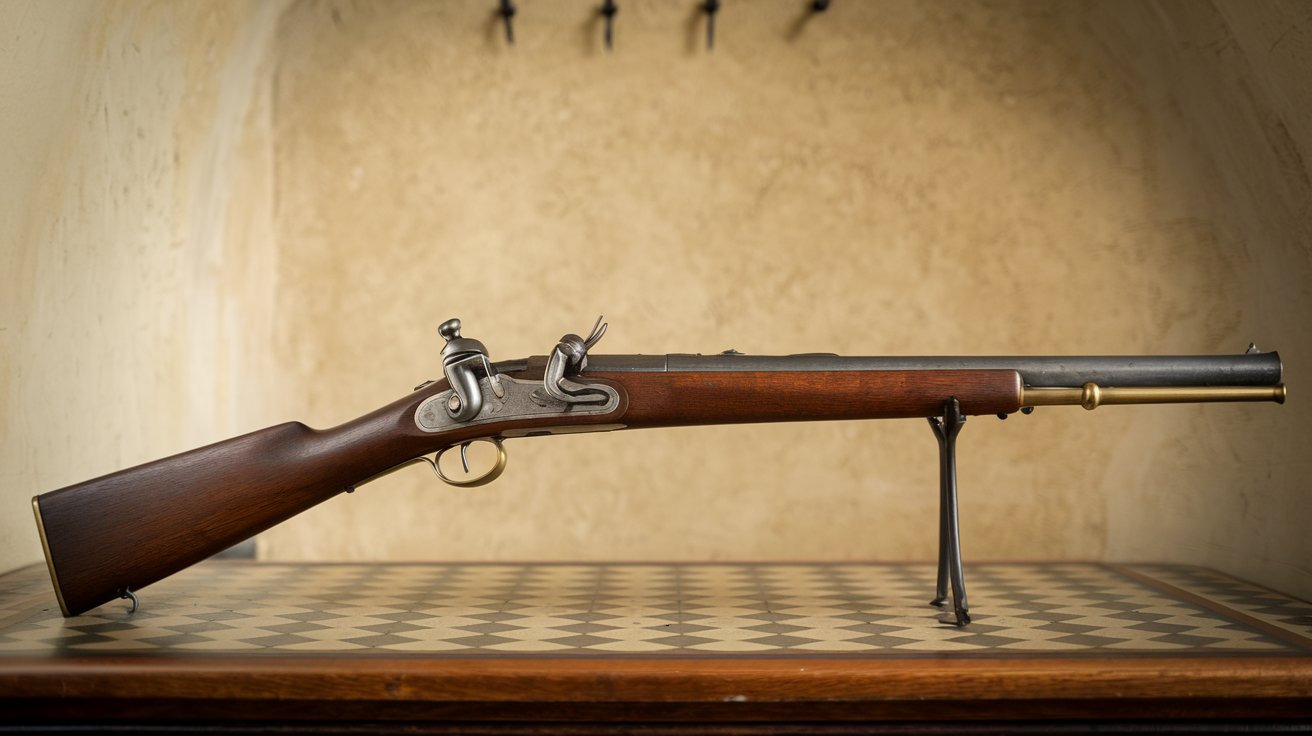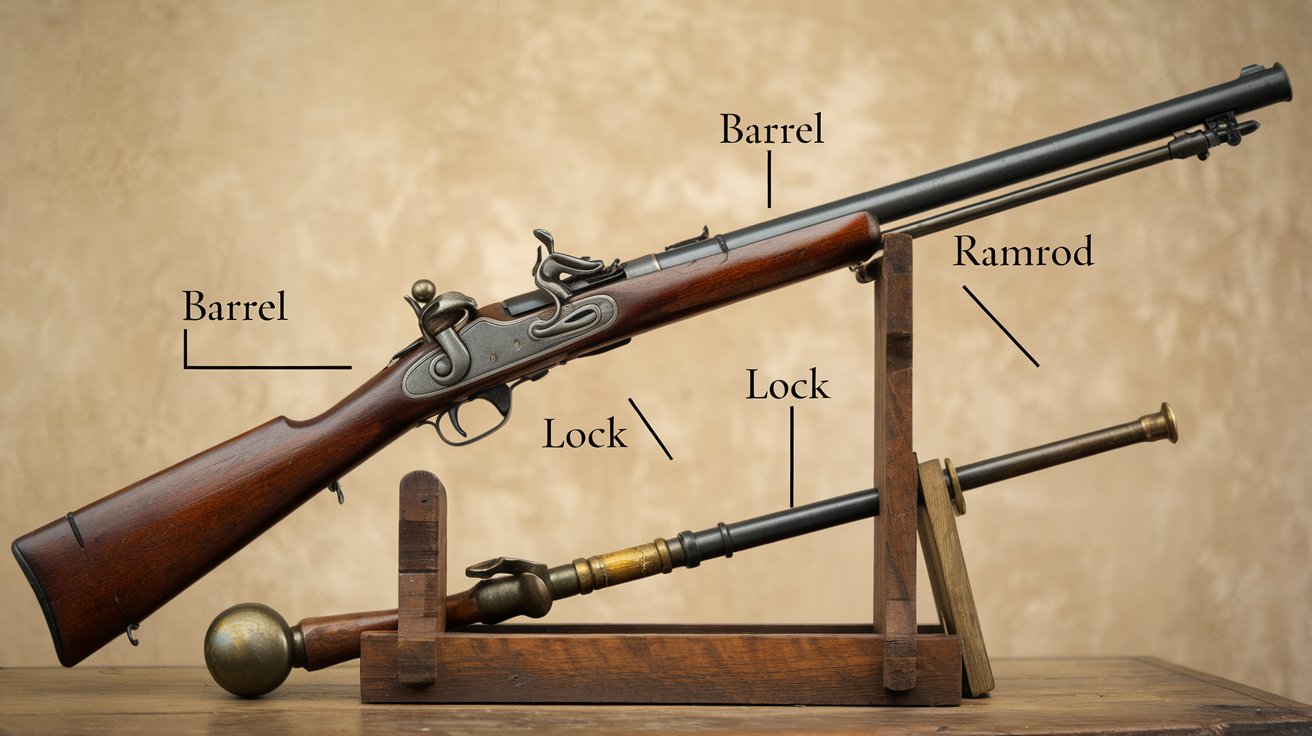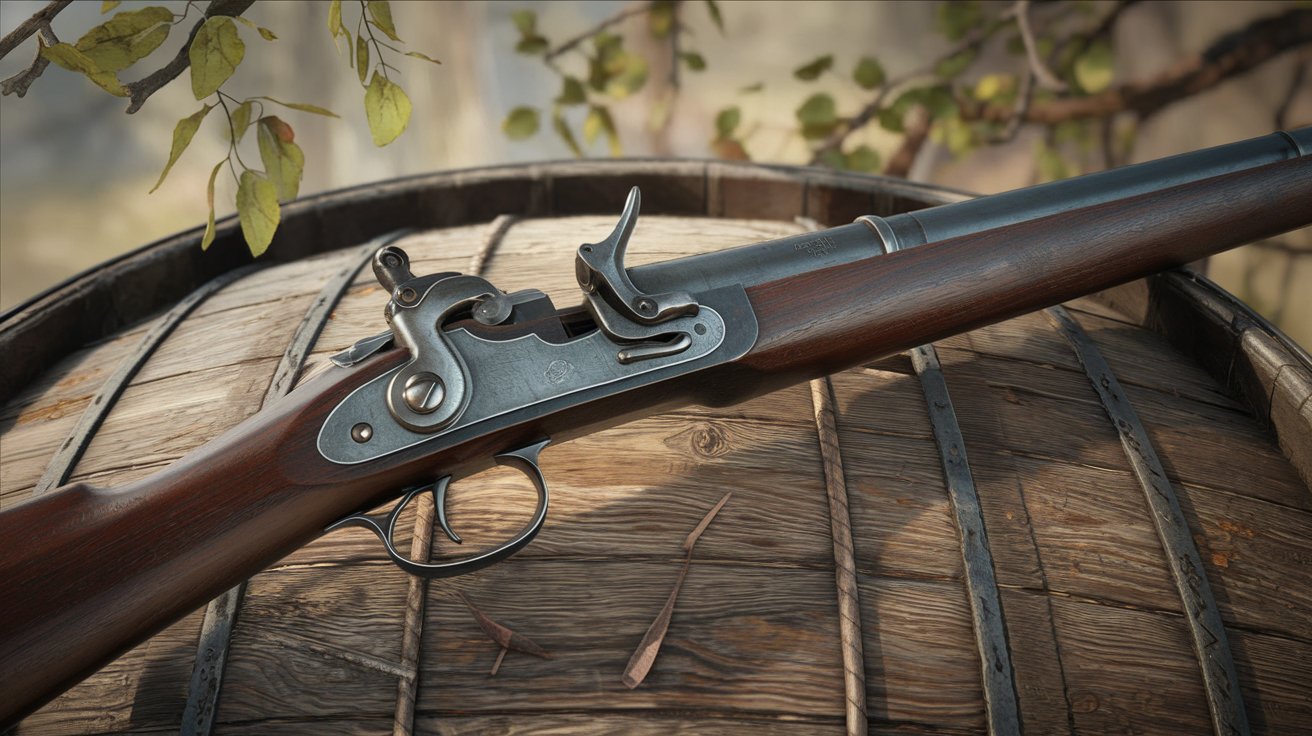
The musket was not invented by a single individual but evolved from earlier hand cannons in Europe during the early 15th century. Spanish and Italian armorers are credited with developing the first true muskets around 1450-1500, with the matchlock mechanism revolutionizing infantry warfare. Understanding the musket’s invention reveals how this smoothbore firearm dominated battlefields for over 300 years and shaped military tactics across continents.
The Origins and Early Development of the Musket
The musket’s history traces back to the transition from medieval hand cannons to more sophisticated firearms in 15th-century Europe. The term musket likely derives from the French word mousquet or Italian moschetto, meaning sparrow hawk, possibly referring to the weapon’s size or the resemblance of its flash to a bird of prey striking. Early muskets emerged around 1450-1500 in Spain and Italy as armorers sought to create more reliable and powerful infantry weapons than the crude hand cannons that preceded them.
These first muskets were heavy, cumbersome weapons weighing 15-20 pounds that required a forked rest for support during firing. The initial designs featured a matchlock mechanism, where a slow-burning match cord was mechanically lowered into a pan containing gunpowder to ignite the main charge. This represented a significant advancement over earlier firearms that required manual ignition, allowing soldiers to aim and fire more effectively. By the early 1500s, Spanish armies were deploying muskets extensively, establishing them as standard infantry weapons.
Key Inventors and Innovators in Musket Development
While no single inventor can claim sole credit for the musket, several key figures contributed to its development throughout the Renaissance period. Spanish armorers in the late 15th century refined the arquebus, a lighter predecessor to the musket, into heavier-caliber weapons capable of penetrating armor. Italian gunsmiths simultaneously worked on similar designs, with both nations competing to produce superior military firearms during the intense European conflicts of the era.
The matchlock musket design became standardized across Europe by 1520, with various armories contributing incremental improvements. German gunsmiths developed the wheel-lock mechanism in the early 1500s, offering more reliable ignition than matchlocks but at greater expense. By 1550, musket production had become an established craft in armories across Spain, France, Germany, and Italy, with each region contributing unique refinements to barrel construction, stock design, and firing mechanisms that would influence firearm development for centuries.
What Country Invented the Musket
Spain and Italy share the primary claim to musket invention, with both nations developing similar weapons simultaneously during the late 15th century. Spanish armies were among the first to deploy muskets systematically in warfare, using them effectively during the Italian Wars (1494-1559) where they demonstrated devastating effectiveness against armored knights. The Spanish musket became particularly renowned after its success at battles like Cerignola (1503) and Bicocca (1522), where musketeers inflicted catastrophic casualties on French cavalry and infantry formations.
Italy’s contribution to musket development cannot be understated, as Italian city-states like Milan and Venice housed some of Europe’s finest armories and metallurgists. These craftsmen perfected barrel-boring techniques and powder mixtures that made muskets more accurate and reliable. By 1530, the musket had spread throughout Europe, with each nation adapting the basic design to their military needs, but the fundamental invention remains rooted in Spanish-Italian innovation during the transition from medieval to early modern warfare.
The Evolution from Hand Cannons to Modern Muskets
The journey from primitive hand cannons to sophisticated muskets represents over 150 years of firearms evolution. Early hand cannons from the 14th century were simple metal tubes loaded with gunpowder and projectiles, ignited manually with a burning stick or hot wire. These weapons, first documented in China around 1288 and appearing in Europe by 1364, were inaccurate, dangerous to operate, and primarily used for psychological effect rather than tactical advantage.
By the early 1400s, European armorers began adding basic stock mechanisms and ignition systems to create the arquebus, a lighter firearm that bridged the gap between hand cannons and true muskets. The matchlock mechanism invention around 1450 proved revolutionary, incorporating a serpentine lever that held a slow-burning match cord and mechanically lowered it into the firing pan upon trigger activation. This innovation led directly to the first true muskets by 1500, weapons heavy enough to require forked rests but reliable enough to become standard infantry arms.
Musket Mechanisms and Technology
Understanding how muskets worked requires examining the three primary ignition systems that evolved between 1450 and 1850. The matchlock musket, dominant from 1500-1650, used a slow-burning cord treated with saltpeter that remained lit during battle. When the trigger was pulled, a mechanical arm lowered the burning match into the priming pan, igniting fine-grain powder that flashed through a touch-hole to detonate the main charge in the barrel. While revolutionary for its time, matchlocks had serious drawbacks including vulnerability to wet weather, visible smoke that revealed positions, and the constant need to keep matches burning.
The flintlock musket, perfected around 1630 and widely adopted by 1690, represented a major advancement in reliability and ease of use. This mechanism used a piece of flint clamped in a spring-loaded hammer that struck a steel frizzen when the trigger was pulled, creating sparks that ignited the priming powder. Flintlocks eliminated the need for burning matches, worked better in damp conditions, and allowed soldiers to keep their weapons ready for immediate firing. By 2026 standards, these mechanisms seem primitive, but they represented cutting-edge military technology that determined the outcomes of major conflicts including the American Revolutionary War and Napoleonic Wars.
Why Is a Musket Called a Musket
The etymology of the word musket remains debated among historians, though the most widely accepted theory traces it to the Spanish mosquete or Italian moschetto, both meaning sparrow hawk or small bird of prey. This naming convention may have referred to the weapon’s smaller size compared to heavy artillery pieces, or possibly to the swift, striking nature of its projectile similar to a hawk’s attack. Alternative theories suggest the term derives from the French mousquet, which entered English vocabulary during the 16th century as military terminology spread across Europe.
The term musket initially distinguished these heavier, more powerful firearms from the lighter arquebuses that preceded them. By the 1550s, musket had become the standard term for smoothbore, muzzle-loading military firearms across Europe and eventually the Americas. In colonial America and the early United States, the term remained in common military use through the 1850s, when rifled firearms began replacing smoothbore muskets. Today in 2026, the word musket specifically refers to these historical firearms, evoking images of Revolutionary War soldiers and 18th-century infantry formations that defined an era of warfare.
The First Armies to Use Muskets
The Spanish Army holds the distinction of being the first military force to systematically deploy muskets as standard infantry weapons, beginning in the late 15th century. Spanish tercios, the dominant military formation of the 16th century, combined pikemen with musketeers in a revolutionary tactical system that dominated European battlefields from 1500-1650. These formations typically consisted of one-third musketeers and two-thirds pikemen, with the firearms providing devastating volleys while pike squares protected against cavalry charges.
The Ottoman Empire also adopted muskets early, with their Janissary corps using firearms effectively from the 1440s onward, though these were initially lighter arquebuses rather than true muskets. By 1526, Ottoman musketeers played a crucial role in the Battle of Mohács, where their firepower helped defeat the Hungarian Kingdom. In Asia, Japanese armies rapidly adopted muskets after Portuguese traders introduced them in 1543, with Japanese smiths producing thousands of tanegashima muskets that transformed samurai warfare within decades. By 2026, historical research continues to uncover new details about musket adoption across different cultures and military traditions.
Smoothbore Muskets vs. Rifled Firearms
The defining characteristic of most historical muskets was their smoothbore barrel, meaning the interior lacked the spiral grooves found in rifles. Smoothbore muskets were faster to load and clean, less expensive to manufacture, and less likely to become fouled with black powder residue during extended firing. However, they sacrificed accuracy, with effective ranges typically limited to 50-100 yards for aimed fire. Military tactics of the musket era compensated for this limitation through volley fire, where ranks of soldiers fired simultaneously at enemy formations, relying on volume rather than precision.
Rifled firearms existed contemporaneously with muskets, featuring spiral grooves cut into the barrel that spun the projectile for greater stability and accuracy. However, rifles were slower to load, more expensive to produce, and more prone to fouling, making them impractical for standard infantry use until the mid-19th century. The American Revolution saw limited use of rifled long guns by specialized units, but smoothbore muskets remained the standard arm. The percussion cap invention in 1820 and Minié ball development in 1849 finally made rifled firearms practical for mass armies, leading to the musket’s obsolescence by the 1860s.
Musket Pistols and Variations
Musket pistols represent an interesting offshoot of musket technology, essentially shortened versions designed for single-handed use. These weapons emerged in the early 16th century, offering cavalry officers and naval personnel a more portable firearm option than full-length muskets. The term musket pistol specifically referred to larger-caliber pistols using similar mechanisms to military muskets, distinguishing them from smaller pocket pistols and dueling weapons.
Other musket variations included the blunderbuss, featuring a flared barrel for scattering shot at close range, popular among naval forces and stagecoach guards from 1650-1850. The carbine represented a shortened musket designed for cavalry use, offering better handling on horseback while sacrificing some range and power. Dragon pistols, large cavalry firearms named after dragoon regiments, bridged the gap between pistols and carbines. By 2026, collectors and museums in the United States preserve thousands of these variations, with institutions like Colonial Williamsburg and the Smithsonian maintaining extensive firearms collections that demonstrate the diversity of musket-era weaponry.
The Musket in American History
The musket played a pivotal role in American history, from colonial settlement through the Civil War era. British Brown Bess muskets armed both sides during the American Revolutionary War, with this .75 caliber smoothbore becoming the most iconic firearm of the conflict. American forces also used French Charleville muskets, provided through military aid beginning in 1777, which many historians consider superior to British equivalents in reliability and craftsmanship. The image of Minutemen with muskets remains central to American historical identity and Revolutionary War commemoration.
The Springfield Model 1795 became the first American-manufactured military musket, produced at the newly established Springfield Armory in Massachusetts. This facility and its counterpart at Harpers Ferry, Virginia, produced hundreds of thousands of muskets through the early 19th century, establishing American firearms manufacturing as a major industry. The musket era in America effectively ended with the Civil War (1861-1865), when rifled muskets like the Springfield Model 1861 and Enfield Pattern 1853 combined musket loading systems with rifled accuracy, representing the final evolution before cartridge firearms rendered muzzle-loaders obsolete. Today in 2026, historical reenactments across the United States keep musket firing traditions alive, with organizations like the National Park Service maintaining authentic demonstrations at Revolutionary War and Civil War battlefield sites.
The Oldest Guns in the World
When examining the oldest guns in the world, we must distinguish between early hand cannons and true muskets. The oldest confirmed firearm is a bronze hand cannon discovered in China, dating to approximately 1288 during the Yuan Dynasty. European examples include the Loshult gun from Sweden, dated to the 1340s-1350s, and various hand cannons found in Italy and Germany from the 1360s-1380s. These primitive firearms fired projectiles using gunpowder but lacked the mechanical sophistication of later muskets.
The oldest surviving muskets date to the late 15th and early 16th centuries, with few complete examples remaining due to their active use and eventual scrapping when obsolete. European museums, including the Royal Armouries in Leeds and the Musée de l’Armée in Paris, house the finest collections of early muskets, with some specimens dating to the 1480s-1510s. In the United States, institutions like the Metropolitan Museum of Art and private collections contain important examples of colonial-era muskets. The oldest American-made muskets date to the early 1700s, with most pre-Revolutionary examples being British or French imports rather than domestically produced weapons.
Modern Collecting and Preservation of Historical Muskets
In 2026, antique musket collecting remains a vibrant hobby and serious investment market in the United States, with values ranging from a few hundred dollars for common percussion-era pieces to over $100,000 for rare Revolutionary War examples with documented provenance. The Bureau of Alcohol, Tobacco, Firearms and Explosives (ATF) classifies antique firearms manufactured before 1899 as non-regulated items under federal law, though state and local regulations may apply. This classification makes musket collecting more accessible than modern firearms collecting, though responsible ownership and proper storage remain essential.
Major firearms auctions occur regularly through houses like Rock Island Auction Company and James D. Julia Auctioneers, where exceptional muskets achieve premium prices. Authentication remains crucial, as the market contains reproductions ranging from obvious modern replicas to sophisticated forgeries. Reputable dealers, museum consultations, and organizations like the American Society of Arms Collectors provide expertise for serious collectors. The preservation of historical muskets requires controlled humidity environments, proper storage to prevent wood warping and metal corrosion, and periodic conservation by qualified specialists. Many collectors participate in living history groups, where they fire reproduction muskets using period-appropriate techniques, combining historical education with practical experience of these weapons that shaped world history.
Related video about who invented the musket
This video complements the article information with a practical visual demonstration.
Everything you need to know about who invented the musket
Who invented the first gun in history?
The first guns were invented in China during the 12th-13th centuries, with the oldest confirmed firearm being a bronze hand cannon from approximately 1288. These early weapons used gunpowder to propel projectiles through metal tubes. European gunsmiths began producing similar weapons by the 1320s-1340s, with the technology spreading rapidly across Europe by the late 14th century. However, these primitive hand cannons differed significantly from later muskets, which emerged in Spain and Italy around 1450-1500 with more sophisticated firing mechanisms and design.
Who was the first army to use muskets?
The Spanish Army was the first military force to systematically deploy muskets as standard infantry weapons, beginning in the late 15th century and expanding significantly during the early 1500s. Spanish tercios combined musketeers with pikemen in revolutionary formations that dominated European battlefields throughout the 16th century. The Ottoman Janissary corps also adopted early firearms around the same period, while Japanese armies rapidly integrated muskets after their introduction by Portuguese traders in 1543, demonstrating the technology’s global military impact.
What is the oldest gun in the world?
The oldest confirmed gun in the world is a bronze hand cannon from China dating to approximately 1288 during the Yuan Dynasty. The oldest European firearm is the Loshult gun from Sweden, dated to the 1340s-1350s. These primitive weapons used gunpowder to propel projectiles but lacked the mechanical firing systems of later muskets. The oldest surviving true muskets with matchlock mechanisms date to the late 15th century, around 1480-1500, with examples preserved in European museums like the Royal Armouries and Musée de l’Armée.
Why is a musket called a musket?
The term musket likely derives from the Spanish mosquete or Italian moschetto, both meaning sparrow hawk or small bird of prey. This naming may have referenced the weapon’s size compared to heavy artillery or the swift, striking nature of its projectile. Alternative theories suggest derivation from the French mousquet. The term distinguished these heavier, more powerful firearms from lighter arquebuses, becoming standard military terminology across Europe by the 1550s and remaining in use through the mid-19th century when rifled firearms replaced smoothbore muskets.
What is the difference between a musket and a rifle?
Muskets feature smoothbore barrels without internal grooves, making them faster to load and less expensive to produce but limiting accuracy to 50-100 yards. Rifles have spiral grooves cut into the barrel that spin the projectile for greater stability and accuracy, extending effective range to 300+ yards. During the musket era (1500-1850), rifles were slower to load, more expensive, and more prone to fouling, making them impractical for standard infantry until the Minié ball invention in 1849 enabled practical mass-production rifled muskets.
Are muskets still legal to own in the United States?
Yes, muskets are legal to own throughout the United States without federal licensing requirements. The ATF classifies firearms manufactured before 1899 as antiques, exempting them from most federal firearms regulations. However, state and local laws vary, with some jurisdictions imposing restrictions on antique firearm possession or discharge. In 2026, collectors can purchase authentic historical muskets or modern reproductions without background checks at the federal level, though responsible ownership, proper storage, and compliance with local regulations remain essential for all firearm owners.
| Key Aspect | Important Details | Historical Impact |
|---|---|---|
| Origin | Spain and Italy, 1450-1500 | Revolutionized infantry warfare and military tactics |
| Primary Mechanism | Matchlock (1500-1650), Flintlock (1650-1850) | Enabled reliable massed firepower for first time |
| First Adopters | Spanish Army, Ottoman Janissaries | Established firearms as dominant military technology |
| Effective Range | 50-100 yards for smoothbore muskets | Required close-range volley fire tactics |
| American Use | Revolutionary War through Civil War (1775-1865) | Central to American independence and national identity |
| Obsolescence | 1850s-1860s with rifled muskets and cartridges | Ended 350+ years of smoothbore dominance |