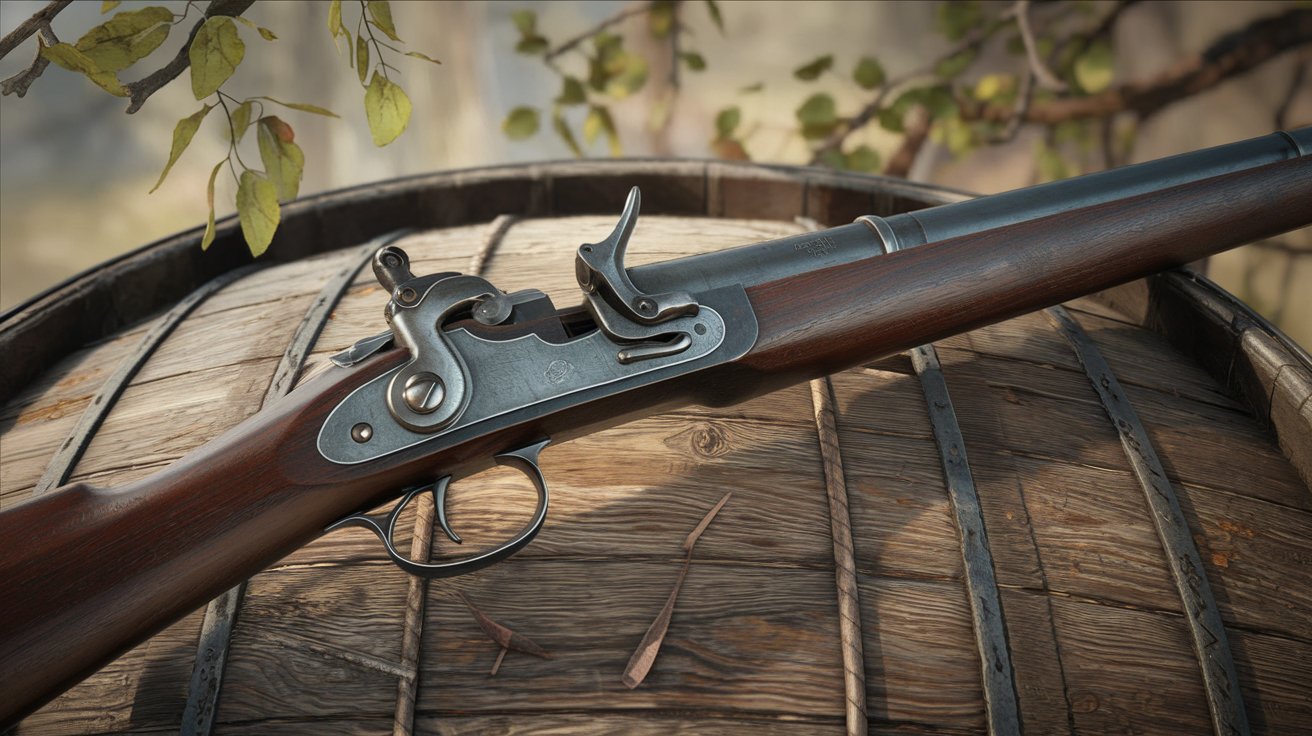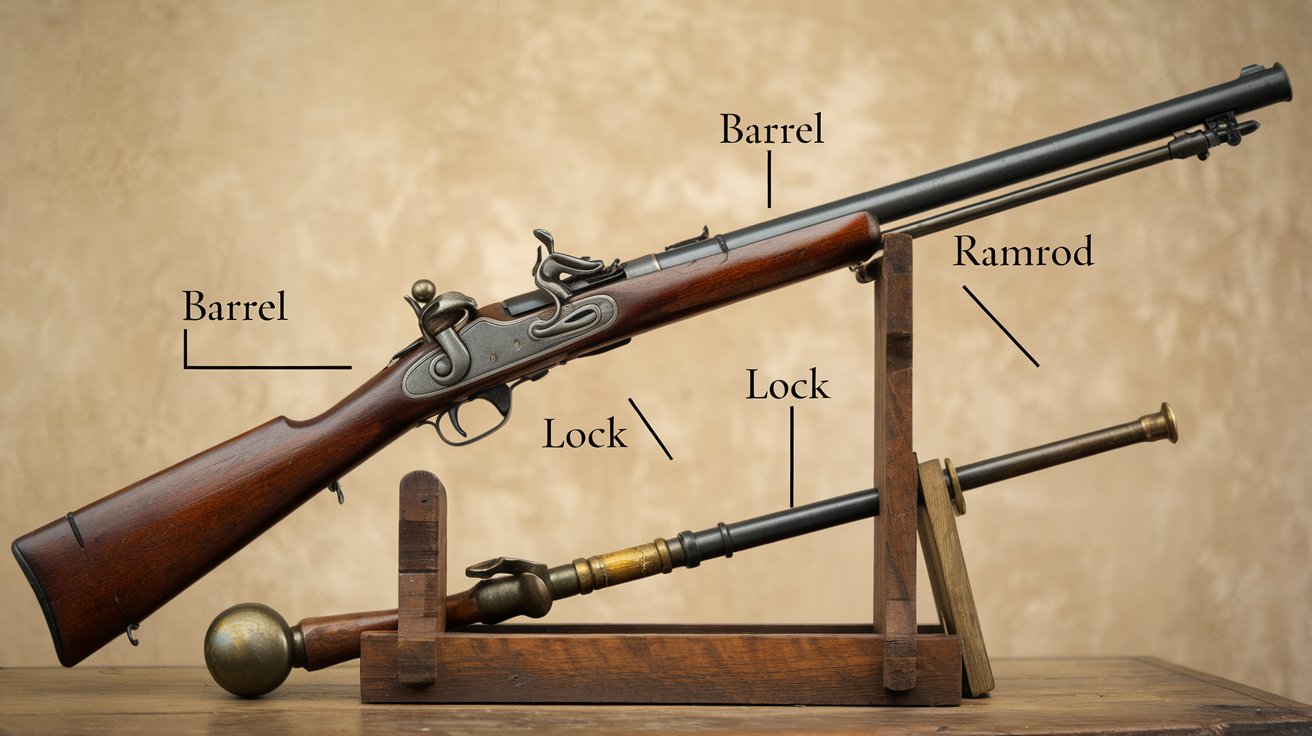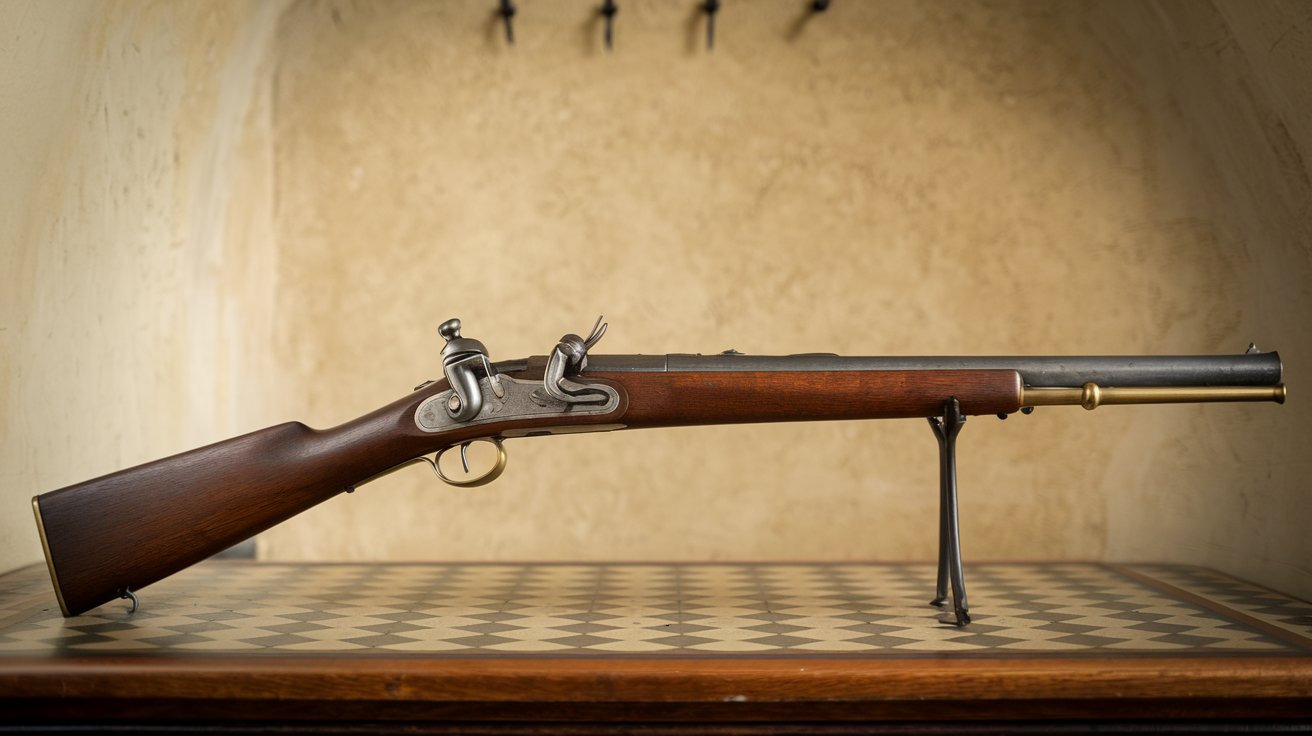
A musket is a muzzle-loaded, smoothbore long gun that dominated military warfare from the 16th to 19th centuries. These firearms typically measured 4 to 6 feet in length and fired lead balls using gunpowder ignition mechanisms like matchlock, wheellock, or flintlock systems. Understanding what makes a gun a musket involves recognizing its defining characteristics: smoothbore barrel construction, muzzle-loading operation, and military-grade design that revolutionized combat tactics across three centuries.
Defining Characteristics of a Musket
A musket distinguishes itself from other firearms through several critical design features. The smoothbore barrel, typically ranging from .69 to .80 caliber, allowed soldiers to load ammunition quickly without the precision required for rifled barrels. This design choice prioritized rate of fire over accuracy, with experienced soldiers achieving 2-3 shots per minute during peak combat conditions. The absence of rifling made muskets less accurate beyond 100 yards, but their simplicity ensured reliability in battlefield conditions where maintenance was minimal.
The muzzle-loading mechanism required soldiers to pour gunpowder down the barrel, followed by a lead ball and wadding, then compact everything with a ramrod. This process, while time-consuming by modern standards, was revolutionary in the 1500s and remained the standard military loading system until the mid-1800s. The length of a musket typically ranged from 48 to 62 inches, with the barrel alone measuring 36 to 48 inches, making these weapons substantially longer than modern rifles to accommodate black powder combustion and provide better accuracy at distance.
Historical Evolution and Origins
The first musket emerged in Spain during the early 1500s, evolving from the arquebus, a lighter matchlock firearm. Spanish forces introduced the term ‘mosquete’ to describe these heavier firearms that required a forked rest for support during firing. By the 1520s, muskets in the 1500s had spread throughout Europe, fundamentally changing military tactics as armies transitioned from pike-and-bow formations to gunpowder-based infantry units. The Spanish tercio formation, combining pikemen with musketeers, dominated European battlefields for nearly a century.
The question of who invented the musket lacks a single definitive answer, as the weapon evolved gradually from multiple innovations across different regions. However, Spanish gunsmiths receive primary credit for standardizing the design around 1520-1530. The name itself derives from the French ‘mousquet,’ possibly referring to the sparrowhawk bird, though linguistic origins remain debated among historians. Throughout the 16th century, musket development accelerated as European powers competed to field more effective infantry firearms, with each nation contributing improvements to ignition systems, barrel metallurgy, and stock design.
Types of Musket Ignition Systems
Understanding what makes a gun a musket requires examining the various ignition mechanisms that evolved over three centuries of use. Each system represented technological advancement, improving reliability, speed, and weather resistance for military applications across diverse combat environments.
Matchlock Muskets (1500s-1700s)
The matchlock musket utilized a slow-burning cord (match) held in a serpentine clamp that lowered into the firing pan when the trigger was pulled. This system dominated early musket design from the 1500s through the mid-1600s, offering simplicity and affordability for mass-produced military weapons. Soldiers carried smoldering match cord throughout battles, creating logistical challenges and safety concerns, particularly during wet weather when matches frequently extinguished. Despite these limitations, matchlock muskets equipped armies worldwide, including early colonial forces in North America during the 1600s.
Wheellock and Snaphance Systems
The wheellock mechanism represented significant technological advancement, using a spinning steel wheel to create sparks against iron pyrite. Developed around 1517, this system eliminated the need for smoldering match cord, improving safety and reliability. However, complex mechanical construction made wheellocks expensive, limiting their adoption primarily to cavalry and officer weapons. The snaphance system, emerging in the mid-1500s, provided a transitional design between wheellock and flintlock technology, using a spring-loaded cock striking flint against steel to generate ignition sparks with improved simplicity and reduced manufacturing costs.
Flintlock Muskets (1650s-1850s)
The flintlock musket became the dominant military firearm from the late 1600s through the early 1800s, perfecting the spark-ignition system with a spring-loaded cock holding a piece of flint. When released, the flint struck a steel frizzen, creating sparks that ignited priming powder in the pan, which then flashed through the touch hole to ignite the main powder charge. This system achieved 85-90% reliability in dry conditions, significantly outperforming earlier mechanisms. Famous models like the British Brown Bess (1722-1838) and French Charleville (1717-1840s) equipped millions of soldiers, including American Revolutionary War forces who relied heavily on French-supplied Charleville muskets alongside domestically-produced variations.
Musket Specifications and Measurements
The question of how long is a musket varies by model and military specification, but standard infantry muskets measured 56 to 62 inches overall. The British Brown Bess measured approximately 58.5 inches with a 42-inch barrel, while the French Charleville measured 60 inches with a 44.7-inch barrel. American-made muskets during the Revolutionary period averaged 59 inches, following European design standards that proved effective through extensive battlefield testing.
Musket weight typically ranged from 9 to 11 pounds when unloaded, with the Brown Bess weighing approximately 10.5 pounds and the Charleville at 10.25 pounds. This substantial weight helped absorb recoil from heavy powder charges, typically 110-165 grains of black powder depending on military specifications. Caliber sizes standardized around .69 to .80 inches, with the British preferring .75 caliber (11-bore) and French forces using .69 caliber. These large-caliber lead balls, weighing approximately one ounce each, delivered devastating kinetic energy at close to medium ranges, capable of penetrating multiple opponents or causing catastrophic tissue damage even with non-vital hits.
Combat Effectiveness and Lethality
Examining how lethal were muskets requires understanding both ballistic performance and battlefield tactics of the 18th and early 19th centuries. A musket ball traveling at approximately 1,000 to 1,500 feet per second possessed tremendous stopping power within effective range, typically considered 50 to 100 yards for accurate fire. Beyond 100 yards, accuracy deteriorated rapidly due to the smoothbore barrel design, with skilled marksmen achieving only 50% hit probability at 100 yards against man-sized targets.
The true lethality of musket fire emerged through volley tactics, where massed infantry formations discharged synchronized salvos at enemy lines. A typical infantry regiment of 500 men delivering coordinated fire could place 200-300 rounds into a 50-yard frontage, creating devastating casualties despite individual weapon inaccuracy. Wounds from musket balls proved horrifically destructive, with the large-caliber, low-velocity projectiles causing massive trauma, shattering bones, and carrying clothing fragments deep into wounds. Military medical records from the Napoleonic Wars indicate that musket wounds to extremities resulted in amputation rates exceeding 75%, while torso hits proved fatal in approximately 85% of cases due to limited surgical capabilities and infection risks prevalent in the early 1800s.
Musket Variations and Specialized Types
Beyond standard infantry muskets, specialized variations served specific military and civilian purposes throughout the musket era. Understanding these variants provides comprehensive insight into the question of what constitutes a musket and how design modifications addressed different tactical requirements across military branches and geographic regions.
Musket Pistol and Cavalry Variants
The musket pistol represents a shortened variant designed for cavalry and naval use, featuring barrel lengths of 6 to 12 inches while retaining musket-bore calibers of .60 to .75 inches. These weapons, more accurately termed ‘horse pistols’ or ‘sea service pistols,’ delivered devastating close-range firepower despite reduced accuracy beyond 25 yards. British Royal Navy pistols issued during the Napoleonic period used .56 caliber smoothbore barrels measuring 9 inches, while cavalry pistols averaged 10-12 inch barrels. The blunderbuss, though technically distinct, shared smoothbore musket characteristics with its flared muzzle designed to facilitate rapid loading during cavalry charges or ship boarding actions.
Rifled Muskets and Transition Weapons
The term rifled musket emerged during the 1840s-1860s as military forces adopted rifled barrels while retaining traditional musket dimensions and muzzle-loading operation. The American Springfield Model 1861 and British Pattern 1853 Enfield exemplified this transitional category, featuring rifled bores with Minié ball ammunition that dramatically improved accuracy to 300-500 yards. These weapons technically blur the definition of muskets, as rifling fundamentally changed ballistic performance, yet military terminology and tactical doctrine continued using ‘musket’ designations through the American Civil War period. By the 1870s, breech-loading rifles had definitively replaced muzzle-loading muskets across all major military forces, though the term persisted in military records and historical documentation well into the 20th century.
Musket Manufacturing and Production
The question of who is the greatest gun designer in musket history encompasses several influential gunsmiths and national armories. British Royal Ordnance at the Tower of London standardized the Brown Bess design that equipped British forces for over a century, while French designers at the Charleville, Saint-Étienne, and Tulle armories created patterns adopted by armies worldwide. In the United States, the Springfield Armory (established 1777) and Harpers Ferry Armory (established 1796) pioneered interchangeable parts manufacturing under innovators like John Hall and Simeon North, revolutionizing firearms production through the American System of Manufacturing that influenced global industrial practices.
During peak production periods, major armories produced thousands of muskets annually. The Springfield Armory manufactured approximately 800,000 muskets between 1795 and 1865, with production reaching 10,000-20,000 units yearly during wartime periods. British contractors produced an estimated 5 million Brown Bess muskets across all variants from 1722-1838, equipping not only British forces but also supplying allied nations and colonial militias. The French arsenals at Charleville alone produced over 7 million muskets between 1717 and 1840, with many exported to American revolutionaries during the 1770s-1780s. This massive industrial output represented remarkable manufacturing achievement for pre-industrial societies, requiring sophisticated supply chains for iron, wood, and skilled labor that employed thousands of craftsmen across multiple specialized trades.
Muskets in American Military History
The role of muskets in American history spans from colonial settlement through the Civil War, fundamentally shaping military doctrine and tactical evolution across nearly 250 years. Early colonial forces relied on imported European muskets, primarily Dutch and English models during the 1600s, with standardization remaining minimal until the Revolutionary period. The American Revolution saw Continental Army forces equipped predominantly with French Charleville muskets supplied through military aid, alongside captured British Brown Bess muskets and domestically-produced Committee of Safety muskets manufactured by colonial gunsmiths following European patterns.
Post-independence, the United States military standardized musket production through federal armories, with the Springfield Model 1795 becoming the first American-designed military musket, closely patterned after the French Charleville. Subsequent models including the Model 1816, Model 1835, and Model 1842 equipped regular army and militia forces through the Mexican-American War and early Civil War period. The question of were muskets used in WW1 receives a definitive negative answer, as smokeless powder rifles like the Springfield Model 1903 had completely replaced muzzle-loading muskets by the 1890s. However, obsolete muskets remained in militia armories and civilian ownership well into the early 1900s, with collectors and historical societies preserving thousands of examples that inform modern understanding of 18th and 19th century military technology.
Modern Musket Collecting and Preservation
In 2026, musket collecting represents a vibrant segment of the American firearms collecting community, with authentic 18th and 19th century examples commanding prices from $800 to $50,000 depending on condition, provenance, and historical significance. Revolutionary War-era muskets with documented military service achieve premium valuations, particularly British Brown Bess and French Charleville muskets bearing regimental markings or known battlefield recovery history. Civil War-era Springfield and Enfield rifled muskets remain more accessible to collectors, with functional examples typically priced $1,200-$3,500, while pristine, unfired specimens command substantially higher values.
The National Rifle Association and American Society of Arms Collectors maintain extensive resources for musket authentication and preservation, crucial for distinguishing original military-issue weapons from later reproductions. Modern reproduction muskets manufactured by companies like Pedersoli, Miroku, and Navy Arms serve living history enthusiasts and black powder shooting sports participants, offering functional weapons built to historical specifications at $600-$1,800 price points. The popularity of Revolutionary War reenacting and 18th-century living history has sustained demand for quality reproduction muskets, with several American manufacturers producing historically-accurate firearms that meet authenticity requirements for National Park Service events and museum demonstrations. In the United States, antique muskets manufactured before 1898 generally require no federal licensing for ownership, though state and local regulations vary, making these historic firearms accessible to collectors and history enthusiasts nationwide who appreciate their technological significance and role in American military heritage.
Musket vs. Rifle: Key Differences
The fundamental question of is a musket a gun receives an affirmative answer, with muskets representing a specific category of long gun distinct from rifles through several defining characteristics. A musket features a smoothbore barrel without internal rifling grooves, while rifles possess spiral grooves cut into the barrel interior that impart stabilizing spin to projectiles. This distinction dramatically affects accuracy and effective range, with rifles achieving precision hits at 300-500 yards compared to muskets’ practical accuracy limit of 50-100 yards.
However, muskets offered advantages that justified their military dominance for three centuries despite inferior accuracy. The smoothbore design allowed substantially faster loading, enabling trained soldiers to fire 3-4 rounds per minute compared to 1-2 rounds from muzzle-loading rifles. Fouling from black powder combustion accumulated less problematically in smoothbore barrels, maintaining functionality through extended combat without cleaning. Additionally, musket ammunition versatility allowed soldiers to fire loose balls without paper cartridges in emergency situations, while rifles required precisely-fitted ammunition for proper engagement with rifling grooves. These practical considerations ensured musket supremacy in military service until the 1850s-1860s when Minié ball technology and percussion cap ignition combined to create rifled muskets that retained traditional loading speed while achieving rifle accuracy, finally obsoleting smoothbore military muskets by the American Civil War period.
Related video about what is a musket
This video complements the article information with a practical visual demonstration.
FAQ – Common Questions
What makes a gun a musket?
A gun qualifies as a musket when it features three defining characteristics: a smoothbore barrel without rifling, muzzle-loading operation requiring powder and ball loaded from the front, and long-gun dimensions typically 48-62 inches overall length. Muskets used matchlock, wheellock, or flintlock ignition systems and served as standard military infantry weapons from the 1500s through the 1850s. The absence of rifling distinguishes muskets from rifles, prioritizing rapid loading speed over precision accuracy in military applications where volley fire tactics compensated for individual weapon limitations.
Who invented the musket?
Spanish gunsmiths developed the first muskets around 1520-1530, evolving the design from earlier arquebuses to create heavier, more powerful firearms. The term ‘mosquete’ originated in Spain, describing weapons requiring forked rests for stable firing due to their substantial weight. While no single inventor receives credit, Spanish military innovations during the early 1500s standardized musket design elements that spread throughout Europe. Multiple nations contributed improvements over subsequent centuries, with French, British, and German gunsmiths advancing ignition systems, barrel metallurgy, and stock design that defined musket evolution through the 19th century.
How lethal were muskets in combat?
Muskets proved devastatingly lethal within their effective range of 50-100 yards, with large-caliber lead balls (.69-.80 inches) causing catastrophic tissue damage and bone fractures. Military medical records from the Napoleonic Wars indicate musket wounds to extremities resulted in amputation rates exceeding 75%, while torso hits proved fatal in approximately 85% of cases. Volley fire tactics amplified lethality, with massed infantry formations delivering hundreds of simultaneous rounds that created devastating casualties despite individual weapon inaccuracy. The combination of massive projectile size, battlefield medicine limitations, and infection risks made musket warfare exceptionally deadly throughout the 18th and early 19th centuries.
How long is a standard musket?
Standard military muskets measured 56-62 inches in overall length, with barrels typically 36-48 inches long. The British Brown Bess measured approximately 58.5 inches with a 42-inch barrel, while the French Charleville measured 60 inches with a 44.7-inch barrel. American Revolutionary War muskets averaged 59 inches, following European military specifications. Shorter cavalry and naval variants ranged from 40-50 inches overall, while specialized musketoons measured 30-40 inches for use in confined spaces. These substantial lengths accommodated complete black powder combustion, provided better sight radius for aiming, and served as pike substitutes with attached bayonets during close combat.
Were muskets used in World War 1?
No, muskets were not used in World War 1. By 1914, all major military forces had transitioned to modern bolt-action rifles using smokeless powder cartridges, magazine feeding systems, and effective ranges exceeding 1,000 yards. The last military muskets saw service during the 1860s-1880s, with breech-loading rifles like the Springfield Model 1873 and European equivalents completely replacing muzzle-loading technology by the 1890s. World War 1 forces used rifles such as the American Springfield Model 1903, British Lee-Enfield, and German Mauser, representing technological advancement over 50 years beyond musket design. Obsolete muskets remained only in civilian ownership and museum collections by 1914.
Is a musket considered a gun?
Yes, a musket is definitively classified as a gun, specifically a muzzle-loading long gun that served as the standard military infantry firearm from the 16th through mid-19th centuries. In firearms terminology, ‘gun’ serves as an umbrella term encompassing all projectile-launching devices using explosive propellant, including rifles, shotguns, pistols, and muskets. Modern legal definitions in the United States classify antique muskets manufactured before 1898 as non-regulated firearms under federal law, though they remain ‘guns’ in technical classification. The term distinguishes muskets from other weapons like bows, crossbows, or bladed weapons, clearly establishing them as gunpowder-based firearms despite their historical obsolescence.
| Musket Characteristic | Specification Details | Historical Significance |
|---|---|---|
| Barrel Design | Smoothbore, .69-.80 caliber, 36-48 inches long | Enabled rapid loading, 2-3 rounds per minute combat rate |
| Overall Length | 56-62 inches total, 9-11 pounds weight | Served dual purpose as firearm and pike with bayonet |
| Effective Range | 50-100 yards accurate fire, 300 yards maximum | Dictated linear battlefield tactics and volley fire doctrine |
| Service Period | 1500s-1860s primary military use | Dominated warfare for 350 years across global conflicts |
| Ignition Evolution | Matchlock to wheellock to flintlock progression | Technological advancement improved reliability from 60% to 90% |
| Production Volume | Millions manufactured by major armories 1700s-1800s | Pioneered interchangeable parts and mass production methods |